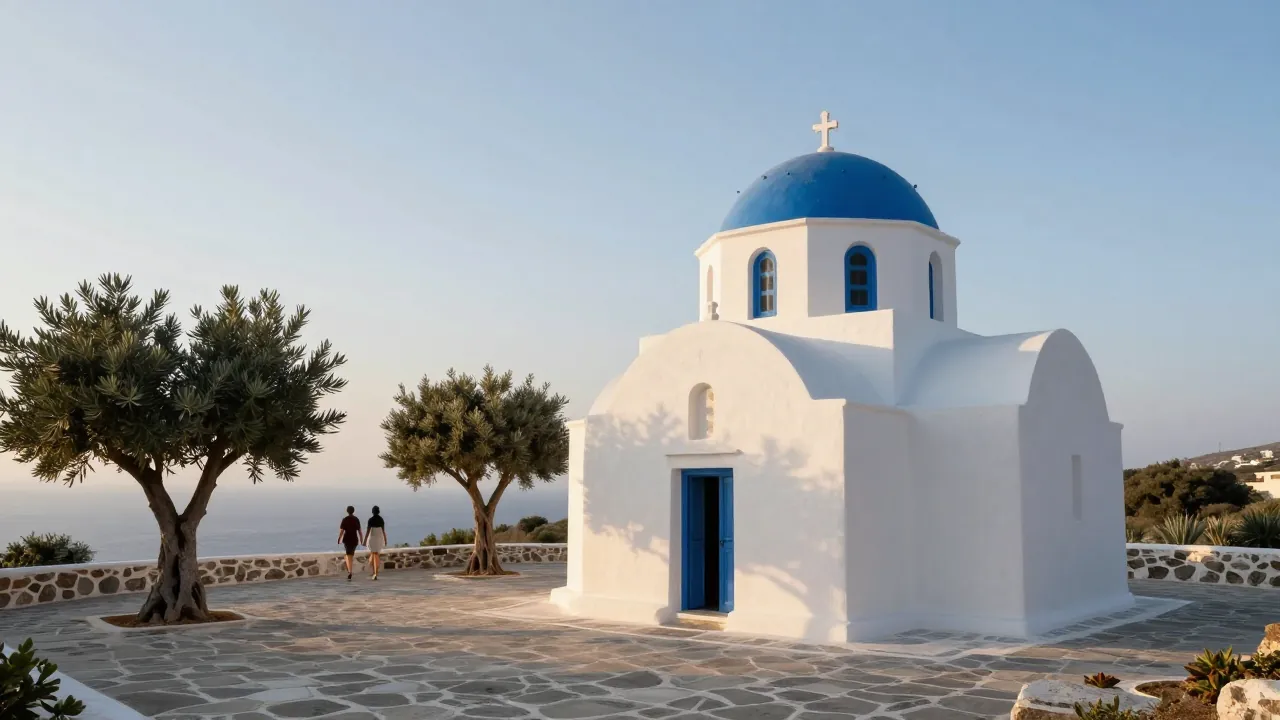
What actually happens, in order, from rings to crowns
The service typically opens with the betrothal, then moves into the crowning. During the betrothal the priest blesses the rings, and they are exchanged three times between the couple's hands, sealing the promise. In the crowning, two crowns (stefana) are placed on the couple's heads and exchanged in the same way, the readings follow, and the couple shares the common cup of wine. Then comes the procession: the priest leads the couple three times around the table holding the Gospel book, with the koumbaros or koumbara following close behind. The dance of Isaiah, as Greeks call those three circuits, is the part guests remember. Then the couple is blessed, the crowns removed, and the service ends.
Details still vary from church to church, including exactly when the crowns come off and how much of the service is in Greek. Ask the priest how it runs at yours. It changes the photographs, and it changes what you tell a photographer who has only shot Western weddings.
Who may hold the rings and who may hold the crowns
The party can be mixed. The Greek Orthodox Archdiocese of America states that non-Orthodox persons may be members of the wedding party but may not exchange the rings or crowns. That one sentence settles a question that can strain families. If your best friend is not Orthodox, she can stand with you, hold a candle, carry the train, or be in the photo line. She cannot be the koumbaro or koumbara, the sponsor who exchanges the rings and crowns. In Greece, the koumbaro role is normally one person, or a couple, and it carries obligations beyond the ceremony day. That guidance comes from an American archdiocese, so raise the question with your parish priest in Greece as well.
For planning purposes, decide early whether you'll have one koumbaro or a koumbaro and koumbara, because it affects the seating, the gifts and the thank-you list. Then assign someone else, a cousin or a friend, to be the guest-wrangler who gets people from the church to the cars. Give that person the same timeline you give the photographer, so the two of them aren't working from different versions of the day.
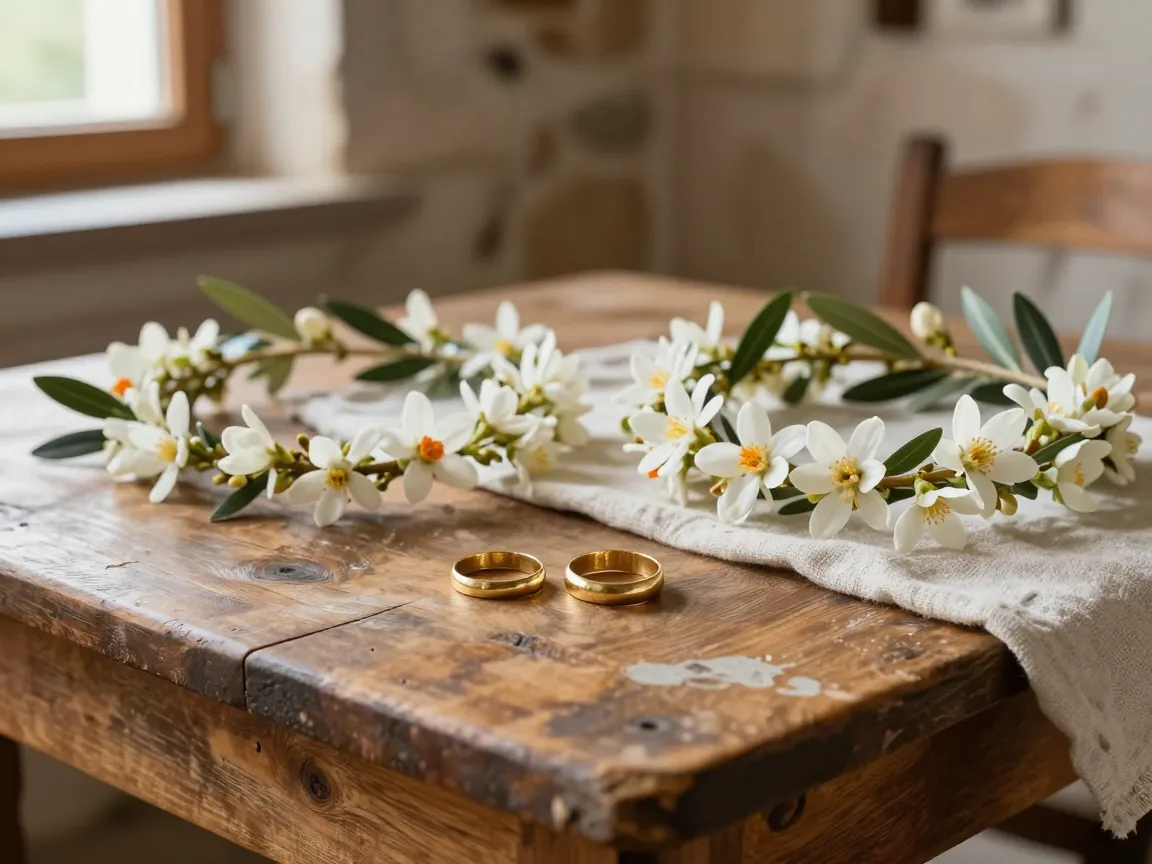
The bilingual briefing card guests can read in ninety seconds
The card is one page, two languages side by side, and it fits in a printed order of service. Greek on the left, English on the right, or the reverse if most guests are Greek. Print it double-sided if you need more room. Keep each entry to one line.
| Field | What goes in it |
|---|---|
| Church name and address | Full street address, plus the nearest landmark |
| Arrival time | The time doors open, not the ceremony start |
| Ceremony start | The time the priest begins |
| Approximate end | Add a buffer; services vary by parish |
| Ring and crown moment | One line explaining who does what |
| Procession | Tell guests not to block the aisle |
| Dress code | Note shoulder cover and head covering expectations, if any |
| Photos | State when guests may and may not photograph |
| Reception transfer | Where cars are, or who holds the keys |
| Contact | One mobile number for the day |
Two lines on that card do more work than the rest. One explains that the crowns belong to the couple, not the church, and are usually kept afterwards. The other tells guests that some Greek churches expect women to cover shoulders and, in certain parishes, the head. Ask your parish what applies before you print anything, because it varies from church to church and from village to city.
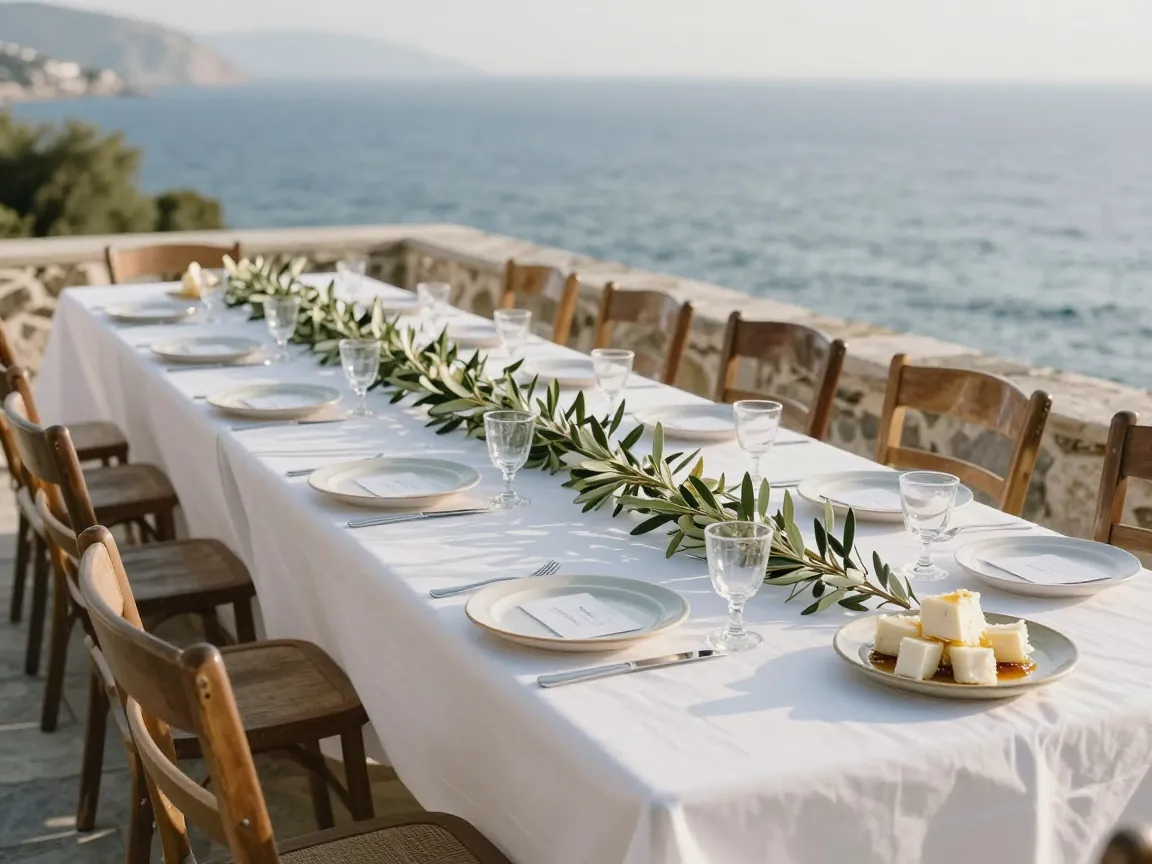
Timing between the church and the reception, with a buffer that works
Guest confusion usually isn't about liturgy. It's about the gap. Greek weddings often photograph the couple at the church, at a beach or in a village square after the service, and guests are left standing with no instructions. Build a gap into the invitation and name it. If the reception starts at, say, 8:00 p.m., write that time down, and say where guests should go if they arrive early. A reception hall with clear evening hours makes this easier to plan. Evionos - Reception Halls, a venue in Agioi Anargyroi, Attica, on Krystalli 40-42, states that its two halls, Evionos and Aenaos, accommodate 400 and 170 people respectively and that opening hours are listed as 7:00-9:00 p.m. daily. According to its listing, the venue operates throughout the year and hosts weddings, baptisms, dances, dinners, parties and events. Ask whether those listed hours are office hours or event hours before you build the photo session around them, and whether guests can wait inside if they arrive early.
For the kind of questions that belong to the priest, the church committee or the estate owner, see our guide to questions that belong to whom when using a chapel at the estate.
One practical rule: put the gap in the invitation as a range, not a single time. Guests tolerate waiting if they know the plan. They don't tolerate not knowing where to go.
Venue, budget and the questions the couple should answer before printing
A Greek Orthodox service doesn't shorten because the venue has a schedule. Work out the full day first, then price it. Our guide to comparing the whole quote for Greece wedding venue costs covers what to count beyond the per-head figure, including the line items international couples forget. Before you print the briefing card, the couple should be able to answer, in writing, who exchanges the rings and crowns, whether the crowns stay on during the procession, how long the photo session is, and what time guests should be seated at the reception. If any answer is still open, ask the priest and the venue in the same week.
Confirm current requirements with the competent authority, usually your parish and, for registration, the municipality, before you print anything.
Send us your headcount, date and church, and we'll pass the brief to venues that can answer for that day and that guest list.
Planning questions
Can a non-Orthodox friend be in our wedding party in Greece?
Yes, as a member of the party, though not as the person who exchanges the rings or crowns. Confirm the exact role with your parish priest, since local practice in Greece can differ from what foreign archdiocese guidance describes.
How long should we leave between the church service and the reception?
It depends on your photo plan and the venue's opening time, so name a range on the invitation rather than a single hour. Guests cope with a wait when they know where to go and when to be seated.
What should go on a bilingual guest briefing card?
Church address, arrival time, ceremony start, dress notes, who exchanges the rings and crowns, photo rules, reception transfer details and one mobile number. Keep it to one page, two languages side by side, so guests read it in ninety seconds.