
Church eligibility: what only the parish can confirm
The Greek Orthodox Archdiocese of America says non-Orthodox persons may be members of the wedding party, but may not exchange the rings or crowns. That one sentence decides more than it seems to. It means the koumbaros or koumbara is normally Orthodox, because the ring and crown exchange is the sponsor's defining act, not a symbolic extra. It also means the wider wedding party can include non-Orthodox friends without any problem. The Archdiocese is an American jurisdiction, though, so put the question to your parish in Greece as well. Ask the parish priest three things in one sitting: whether the person you've chosen is eligible, what documents the couple and the sponsor each need to bring, and whether the sponsor must be present at any earlier step. If the answer to eligibility is no, you don't lose the friendship. You change the job title and keep the person close. A friend who reads a petition at the reception instead of holding the crowns is still doing real work. Get the priest's answer before you ask anyone, because withdrawing an invitation is far more awkward than waiting a week to ask.
The ceremony itself: crowns, rings, and standing in the right place
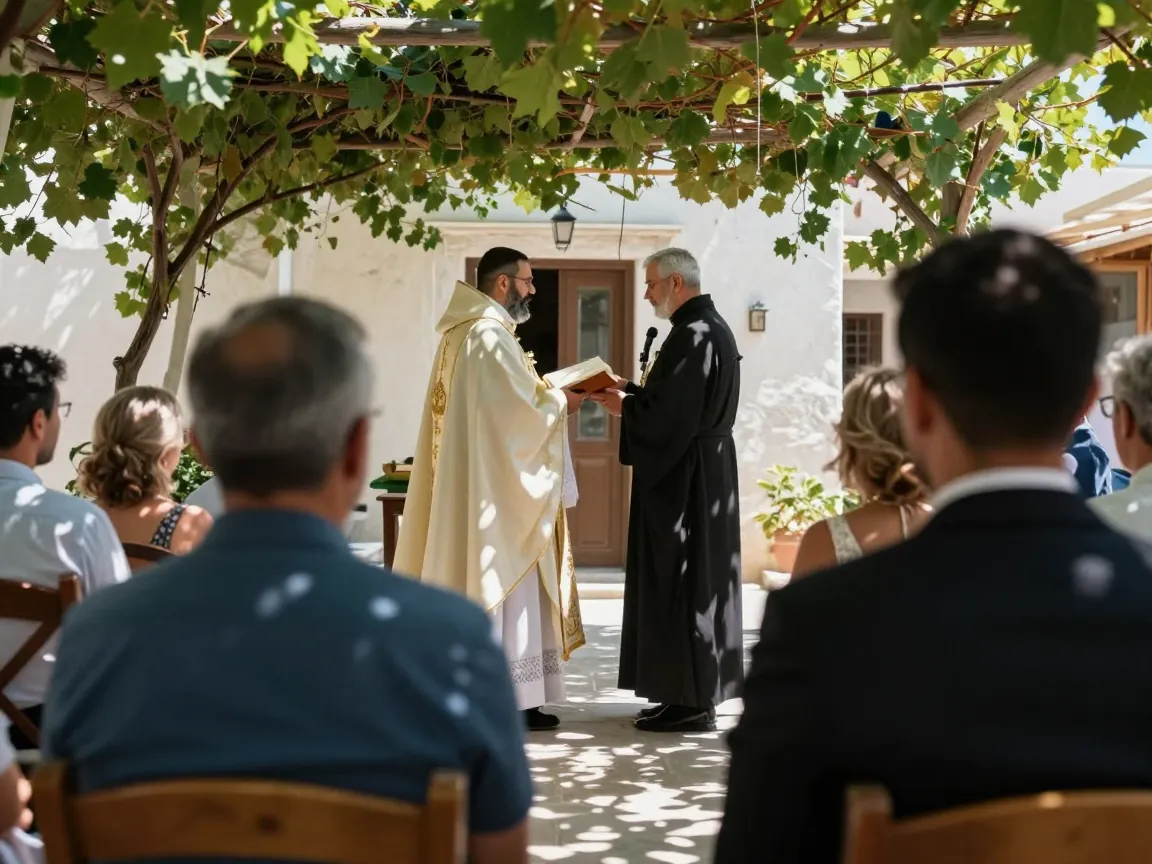
The crowning is the moment the koumbaros is there for. Depending on the parish, the priest may hand the crowns to the sponsor to place, or hold them and have the sponsor assist; ask which, because it changes where the sponsor stands and how the photos come out. The rings are exchanged the same way, by the sponsor, which is why the eligibility point above is not a formality. Two practical details we'd raise with every sponsor. First, rehearsal: ask the priest whether a run-through happens and when, because a sponsor who has never held a crown in a crowded church will find the first minute disorienting. Second, hands: long nails, loose rings of your own, and a heavy bouquet are all fine until you're the one handling someone else's wedding bands. The sponsor should also know the physical logistics of the day: where to stand, when to move, and who takes the crowns back if the couple wants them kept. Ask about the crowns specifically: who carries them out of the church, and where they go afterwards. Settle that before the ceremony, not in the car park afterwards.
Gifts and costs: which are rules and which are family conversation
Our view: most of what circulates online about koumbaros costs is regional habit dressed up as custom. The only hard rule in this article is the one from the Archdiocese about rings and crowns, and it's about who may do it, not who pays for it. Godparent-style gifts, the crowns themselves, the witness gift, a contribution to the reception, the couple's candles: these vary by family, by island, and by decade. Nobody should be handed a bill they didn't agree to in advance. The right move is a short, direct conversation with the sponsor before the wedding, framed as "these are the things people sometimes cover, tell us what you'd like to take on." Then write down who agreed to what. A short message after the conversation, listing what each person said they'd cover, saves a much harder conversation months later. If the sponsor is travelling to Greece for the wedding, the costs they're absorbing may already be substantial, and saying that out loud is fair rather than rude. If the couple's families are splitting reception costs between them, the sponsor should know that too, so they don't accidentally duplicate something. Keep money and duty separate in the conversation. Duty is the priest's domain. Money is the family's. Blurring them is how people end up hurt.
A koumbaros conversation checklist for church, ceremony and reception
Use this as an agenda, not a script. Ten minutes with the right person beats a month of hints.
| Stage | What to settle | Who confirms it |
|---|---|---|
| Church | Whether your chosen person is eligible as sponsor | Parish priest |
| Church | Documents the couple and sponsor each bring | Parish priest, municipality or registry office |
| Church | Whether a rehearsal happens, and when | Parish priest |
| Ceremony | Who handles the rings and crowns, and how | Parish priest; Archdiocese guidance for context |
| Ceremony | Where the sponsor stands and moves | Parish priest, at rehearsal |
| Ceremony | What happens to the crowns afterwards | Couple, then parish practice |
| Reception | Whether the sponsor speaks, prays or reads | Couple |
| Reception | What the sponsor is expected to cover, if anything | Family conversation |
| Reception | Travel, accommodation, seating | Couple and sponsor |
| Reception | Gifts, and whether they're exchanged publicly | Family conversation |
Confirm current requirements with the competent authority, the parish, municipality or consulate, since these vary by location and change over time.
What this means for the reception you're planning
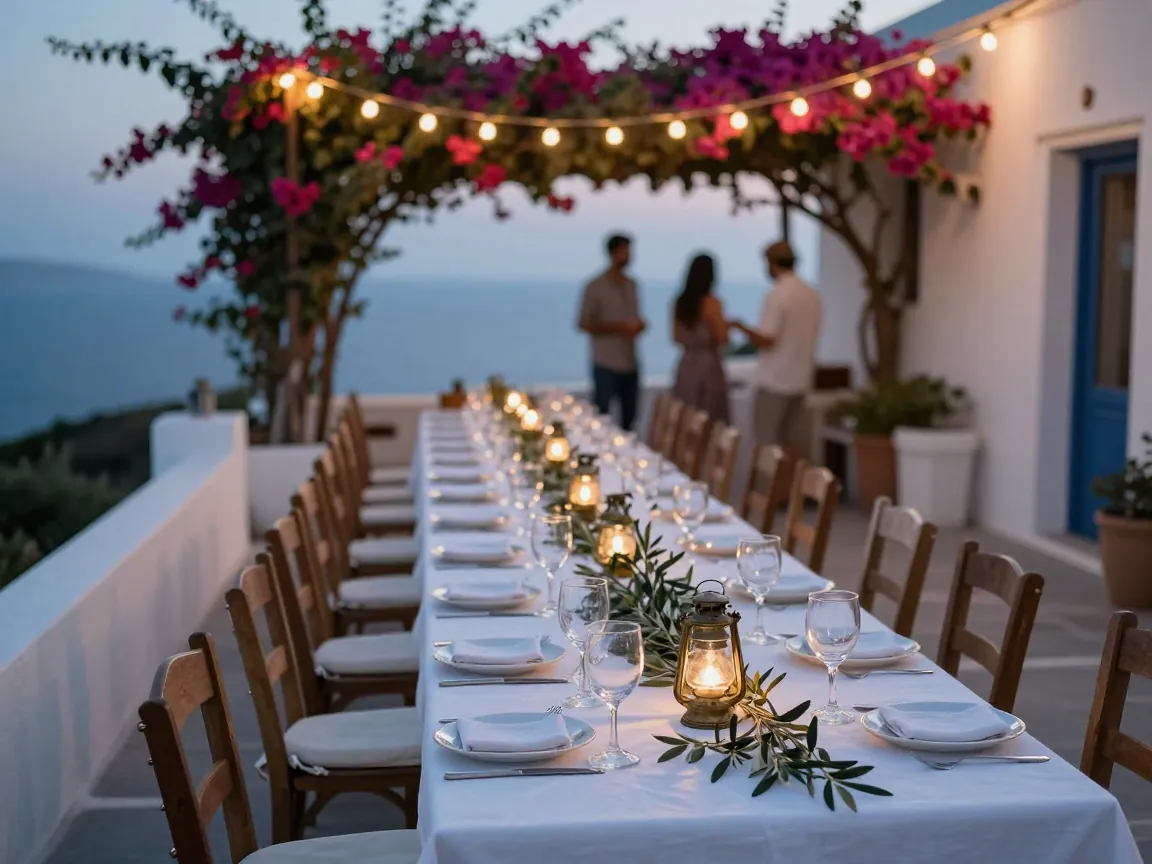
If the sponsor is travelling from abroad, they'll want to know the shape of the reception before they agree to anything, because a long dinner and a long journey are two different commitments. Decide your guest count and date first, then ask. That order matters for venue conversations too. Leykonoi Reception Hall in Ilion, for example, states a capacity of approximately 300 people and lists opening hours of 7:00 p.m. to 4:00 a.m. daily. Those are the venue's stated hours, not event access times, so ask what time your guests can actually arrive and when they must leave. These are the listing's facts, not our recommendation.
If your budget is still forming, our guide to what a Greece wedding package actually includes is the right next read, because it separates what venues bundle from what you arrange separately.
And if the ceremony is happening in a chapel on private grounds rather than a parish church, the division of responsibility shifts again, and a chapel at the estate raises its own questions. Send us your headcount, date and rough brief, and we'll suggest venues whose listings fit what you describe, including the hours your sponsor's travel plans depend on.
Planning questions
Can a non-Orthodox friend be my koumbaros?
The Archdiocese guidance says non-Orthodox guests may join the wedding party but may not exchange the rings or crowns. Since that exchange is the sponsor's central act, ask your parish priest whether your chosen person qualifies before you extend the invitation.
Who pays for the crowns and the sponsor's gift?
There is no rule we can point to. Practice varies by family and region, so treat it as a conversation rather than an obligation. Ask directly what your sponsor would like to cover, then write down what was agreed.
Does the koumbaros have duties at the reception?
There's no fixed list. Couples often seat the sponsor near them, and the sponsor may speak or read. Whether they contribute to reception costs is a family matter, not a church one. Settle seating and any speech with the couple in advance.