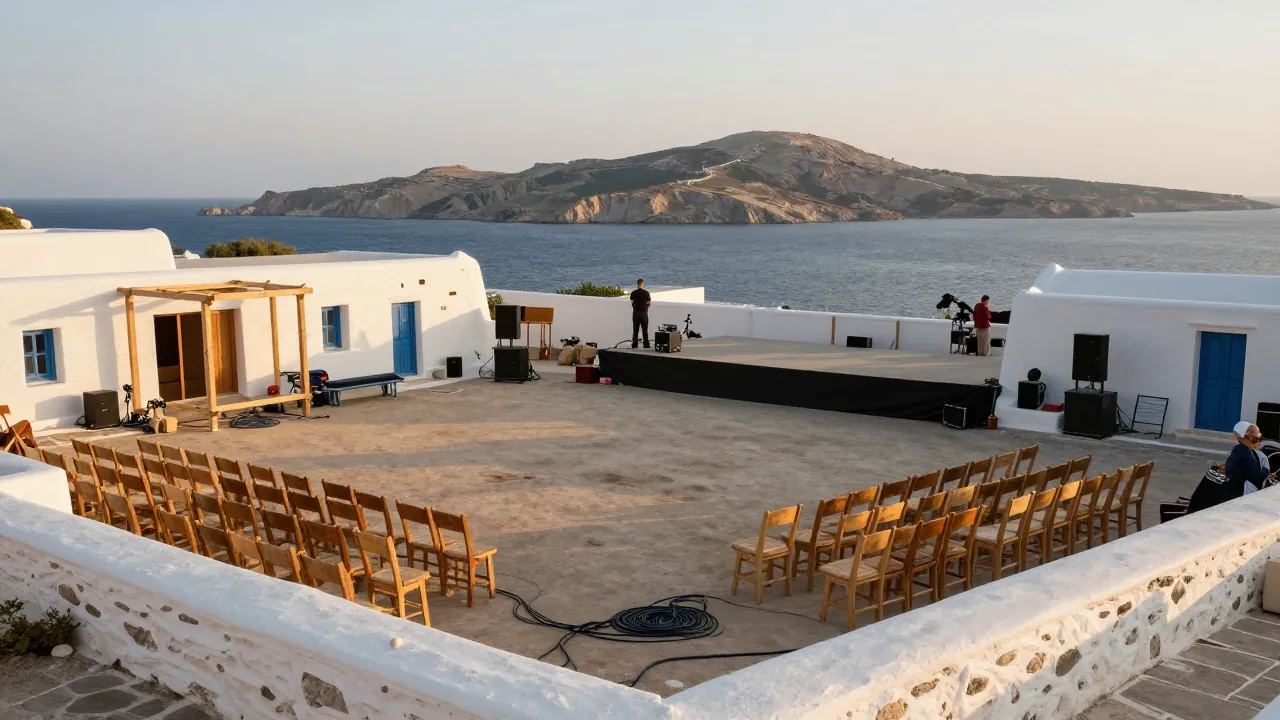
Why a three-day event is a different venue conversation
A one-night gala is a sprint: you arrive, set up, perform, strike and leave. A multi-day festival is a residency. The building becomes your operational base for the better part of a week, and everything that can be borrowed for one night has to be owned, rented or staffed across several. That changes the cost structure, the insurance, the staffing roster and the relationship with neighbours.
A space can look convincing on a single-night site visit and still turn out, two weeks out, to allow no overnight access, offer no secure storage for production gear and close its gates at a fixed hour. None of those are small problems once tickets are on sale, and none of them show up on a floor plan.
Load-in, load-out and the days in between
Ask the venue to put load-in and load-out windows in the contract, not just the event dates. You want to know: when can trucks arrive, who controls the gate, is there a staging area for cases, and is there somewhere lockable for equipment overnight.
Megaron's conference-centre description identifies stage and understage infrastructure, which is a useful reminder that production facilities deserve their own assessment rather than being assumed from a floor plan. The Megaron building page is worth reading for that reason. Ask your venue the same question about its stage, rigging points, power distribution and backstage access, and get the answer in writing.
A practical sequence for a three-day festival, again an example only:
- Day minus two: trucks arrive, staging and rigging
- Day minus one: sound check, lighting focus, dressing rooms set
- Day one to three: event days with a nightly reset window
- Day plus one: strike, load-out, condition report
If the venue can't give you the minus days, you're compressing rigging into the morning of the event. That's a risk you should price before you commit.
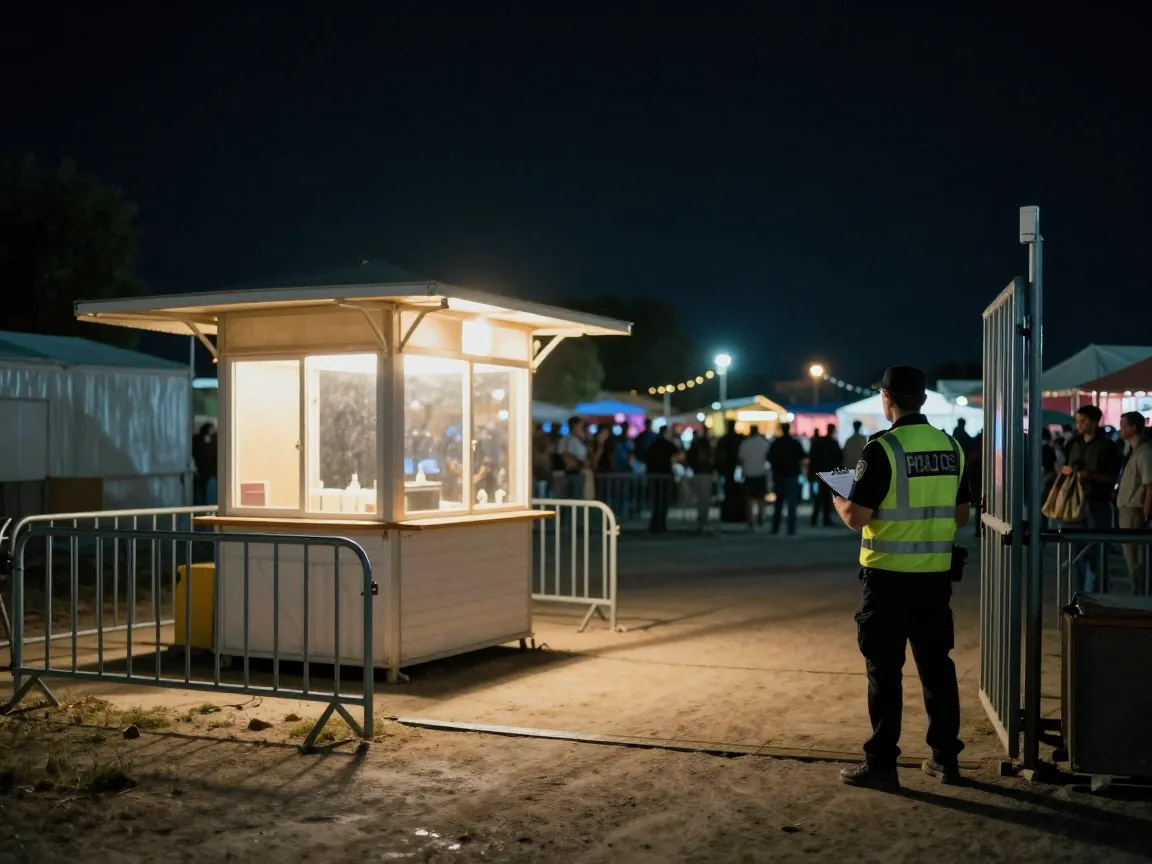
Overnight security, access control and who is on site at 3am
This is the question that's easiest to leave until too late. Ask who is responsible for the perimeter overnight, whether the venue supplies guards or you do, and how keys, codes and alarms are handled when your team leaves at midnight and the venue's own staff go home.
Get clarity on:
- Whether the venue has a manned control room or a remote monitoring arrangement
- Who holds the keys, and whether you get a set
- Whether alcohol, cash and equipment are stored separately
- What the incident escalation process is if someone is found on site
Insurance sits alongside this. Ask the venue what its own policy covers and what it expects yours to cover, and confirm that with your broker rather than a venue's verbal summary.
Power, water, toilets and crowd flow across multiple days
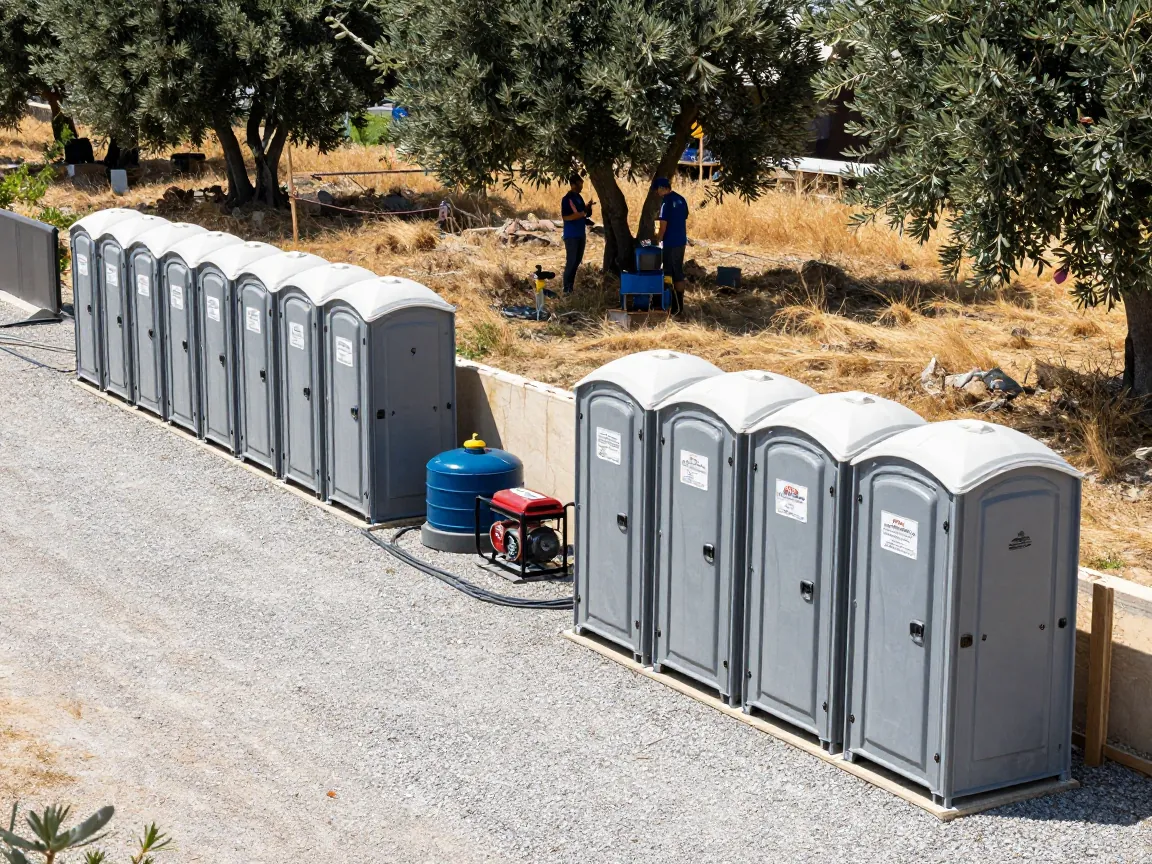
A one-night event can survive on generator hire and portable loos. A three-day festival needs those systems to hold up under repeated use. Ask for the venue's power capacity in writing, the location of distribution boards, whether a generator is permitted and where it can sit, and what happens if the mains supply trips mid-performance.
Toilets are the least glamorous and most predictable failure point. Ask how many the venue has, whether they're plumbed or portable, who services them each day and how often. Crowd flow matters too: entry lanes, re-entry policy, bar queue design and the path between stages. Walk the site at the time of day you expect your busiest moment and picture 2,000 people, an example figure, moving through it.
Licensing, noise and the neighbours on night two
Licensing for multi-day events in Greece is not something a venue can simply wave through. Ask the venue which permits it already holds, which ones you must obtain, and which authority issues each. Confirm current requirements with the competent authority, in most cases the municipality, before you print a single ticket. That step is not optional.
Noise is the flashpoint on night two. Ask about curfew times, sound limits, whether a sound engineer from the venue attends, and how complaints are handled. Ask directly whether past events have drawn neighbour complaints, and how the venue dealt with them; the answer tells you a lot.
A multi-day festival venue checklist
Use this table on your site visit and leave with a completed copy. Our related guide on fundraising dinner costs makes a similar point about separating venue costs from programme costs, and the same discipline applies here.
| Item | Question to ask | Who confirms it |
|---|---|---|
| Load-in days | How many days before the event can we access the site? | Venue manager |
| Overnight security | Who secures the perimeter between midnight and 7am? | Venue manager |
| Power capacity | What is the total capacity, and is a generator permitted? | Venue technical lead |
| Toilets | How many units, plumbed or portable, serviced how often? | Venue manager |
| Licensing | Which permits does the venue hold, which are ours? | Municipality |
| Noise | What is the curfew, and who monitors levels? | Municipality |
| Insurance | What does the venue cover, what must we cover? | Your broker |
| Storage | Is there a lockable space for equipment overnight? | Venue manager |
| Re-entry | Is re-entry allowed, and how is it controlled? | Venue manager |
| Strike | What time must the site be clear on the day after? | Venue manager |
If you're also planning daytime activity during the festival, our piece on whether to run participation or demonstration is a useful model for thinking about structured sessions inside a longer programme.
For a sense of what a Greek multivenue complex looks like in practice, Universe Athens is a creative multivenue in Aigaleo with three named spaces, K-5, S-2000 and S-1000, and full technical production support on site, according to its listing. We're not saying it suits every festival, only that the format of three halls under one roof is worth examining if your programme has multiple strands.
A limit worth stating plainly: this article can't tell you what a specific venue will agree to. Every owner negotiates differently, and the terms that matter most are the ones written into your contract, not the ones discussed on a walkthrough.
Tell us your expected attendance, dates and programme outline, and venues in our directory can reply with what they can actually accommodate.
Planning questions
What should I ask about overnight security at a festival venue?
Ask who secures the perimeter between your team leaving and the next morning, whether guards are venue-supplied or yours, who holds keys and codes, and how incidents are escalated. Get the answer in the contract, not just in conversation.
How many load-in days should I request for a multi-day festival?
In our example schedule that means two days before the first event day, one for staging and rigging and one for sound and lighting checks. If the venue cannot offer that, price the compression risk before committing to ticket sales.
Who is responsible for licensing a multi-day festival in Greece?
Responsibility is usually split between venue and organiser, so ask which permits the venue already holds and which you must obtain. Confirm current requirements with the competent municipality before selling tickets, as rules vary by location.