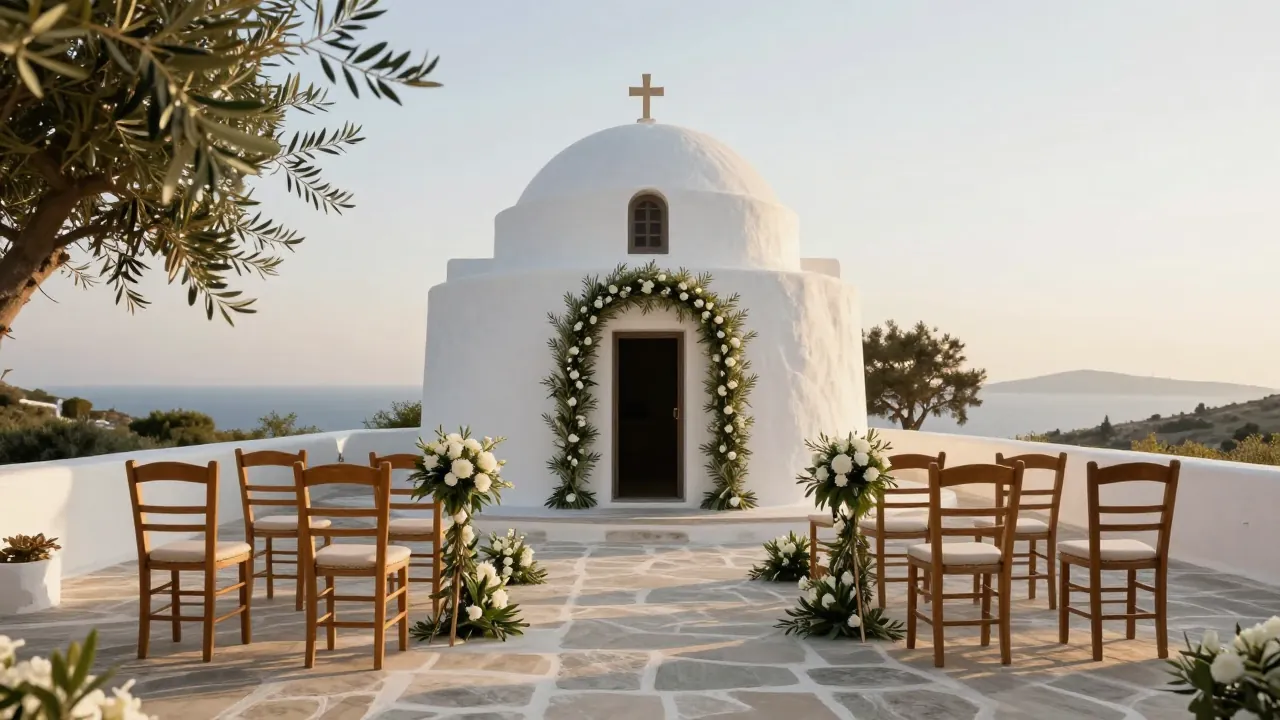
The three ceremonies ask different things before the venue search begins
A legal civil wedding in Greece is a civil marriage registered through the state. The U.S. Embassy in Greece explains that for a civil marriage the required documents are presented in person at the City Hall, the Demarchio, or to the President of the Community where the marriage will take place. Read that twice, because it has venue consequences: the place of registration shapes which venues make sense for you.
A Greek Orthodox wedding is a religious service with its own process. If you're marrying through a parish, the parish office, not a venue coordinator, controls the steps. Foreign-resident couples should ask the parish early what it requires from them, and how the civil registration side is handled afterwards.
A symbolic ceremony is a ceremony without civil registration. You and your celebrant decide what happens on the day. Nothing about it creates a legal marriage in Greece, and nothing about it needs a Demarchio appointment. That freedom is the whole appeal, and also the reason some relatives will ask if you are really married.
The mistake to avoid is booking the venue first and working out the ceremony route second. The venue rarely refuses you. The paperwork does the refusing.
What each ceremony type asks of you and of the venue
Use this as a working checklist before you contact anyone.
| Question | Civil (legal) | Greek Orthodox | Symbolic |
|---|---|---|---|
| Who registers the marriage | The state, via Demarchio or community | The church, with civil registration handled separately | Nobody; it isn't a legal marriage |
| Where documents go | Presented in person at City Hall or to the President of the Community | Through the parish office for the religious side | Nowhere official |
| Venue constraint | The registered location and the reception are two separate decisions | Church and reception need a workable sequence | Any venue that fits the guest count |
| Guest experience | Ceremony often at a civic building, reception elsewhere | Guests travel between church and reception | One location possible, ceremony and party in one place |
| Main timeline risk | Document preparation before the date is fixed | Parish requirements and church availability | Almost none on the legal side |
| Confirm with | Municipality or community office | Parish, then registry office | Your celebrant and the venue |
Two rows deserve comment. First, a symbolic ceremony is the only column where the ceremony and the party can share one room with no logistics gap. Second, the civil column splits your day in two, and that split is a transport question, not a decoration question.

Where a symbolic ceremony changes the shortlist, with a winery example
Our suggestion for symbolic couples: shortlist on atmosphere, capacity and access, in that order. That opens up working estates that a church schedule would rule out. The listing for Kellari Papachristou | Event Estate - Winery says the Paiania property combines wine production with event spaces and hosts wine tastings, weddings, baptisms and corporate events; its address is 16th km Spaton Avenue, Paiania. That dual identity is why it's worth a look: ask whether the ceremony and the reception could both take place on the one property, so nobody needs a second site.
It also tells you what to ask. Production and celebration share a property, so ask where the ceremony would stand relative to working areas, and whether tastings or tours form part of the evening. And read any listing, ours included, as a starting point: ask the venue to confirm capacity, timings and catering in writing for your date.
If your guest list is spread across countries, the base question matters more than the venue question. Our guide to choosing a Crete wedding base before the venue shortlist covers that trade-off directly.
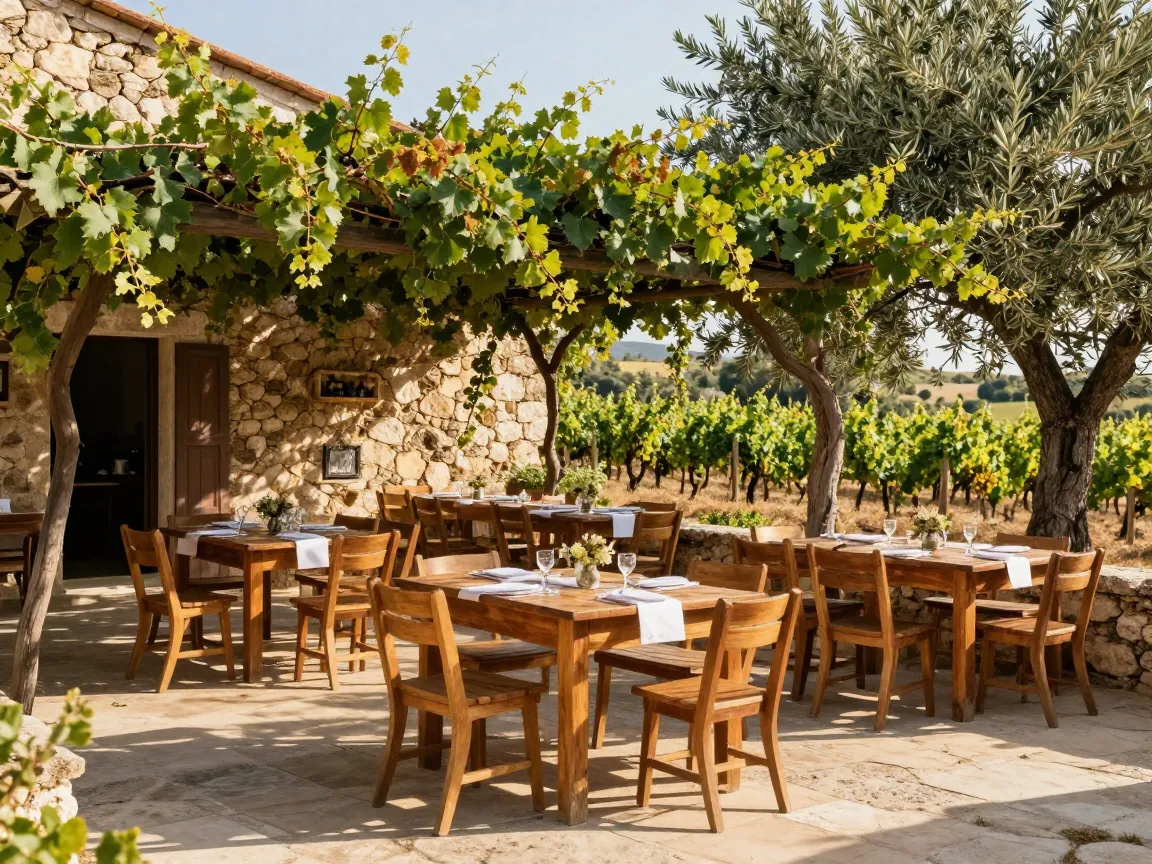
Documents, translations and who actually confirms the rules
Every legal route in Greece involves documents, and the honest position is that we won't quote you thresholds or deadlines, because they change and they depend on your nationality and municipality. Instead, ask three precise questions of the right office:
- Which documents do you require from us, in what form, and do they need translation or legalisation?
- Do we present them in person, and does that happen at the Demarchio or with the President of the Community?
- How far in advance should we start, given our wedding date?
For a religious wedding, replace question two with a parish question. For a symbolic ceremony, there's no equivalent office, which is precisely why symbolic planning moves faster. If you go that route and end up comparing package quotes, read what a Greece wedding package actually includes before you weigh one offer against another.
Whenever a rule matters to your date, confirm current requirements with the competent authority: the municipality, the parish or your consulate.
The package question, and what we'd do in your position
Once the ceremony type is fixed, packages become comparable. The same words cover different scopes, so ask what is included in writing rather than assuming. Ask for the inclusions list, the payment schedule and the cancellation terms as separate documents, because a single summary page tends to blur the boundaries between what the venue provides and what you still have to book yourself. That distinction decides your real budget, not the headline figure.
Our view: if the legal marriage matters to you, handle the civil side at home or in a quiet Demarchio appointment and hold the celebration as a symbolic ceremony where you actually want to be. It costs you some administrative time and buys back the venue freedom that a church-and-reception sequence removes. If the religious service matters, plan the whole day around the church and treat the reception as the second act. If neither, go symbolic and put the budget into the setting.
A caveat: symbolic ceremonies are the easiest to plan and the hardest to explain to relatives who expect a certificate. Decide early how you'll answer that question, and the rest of the planning stays calm.
Send us your headcount, your date and whether you want the ceremony legally recognised in Greece, and we'll point you to venues whose listings fit those three answers.
Planning questions
Does a symbolic ceremony in Greece make us legally married?
No. A symbolic ceremony is a celebration without civil registration, so it creates no legal marriage in Greece. If you need legal recognition, arrange a civil marriage through the municipality or marry legally at home, then hold the symbolic ceremony separately.
Why does the ceremony type change which venues we shortlist?
A legal civil marriage usually takes place at a civic location, so your reception often becomes a second site. A church wedding needs a workable sequence between church and venue. A symbolic ceremony can put ceremony and reception in one place, which widens your shortlist considerably.
Where do we present documents for a civil marriage in Greece?
The U.S. Embassy in Greece says documents are presented in person at the City Hall, the Demarchio, or to the President of the Community where the marriage takes place. Ask your municipality which office applies and confirm current requirements locally.