Why one room is rarely enough
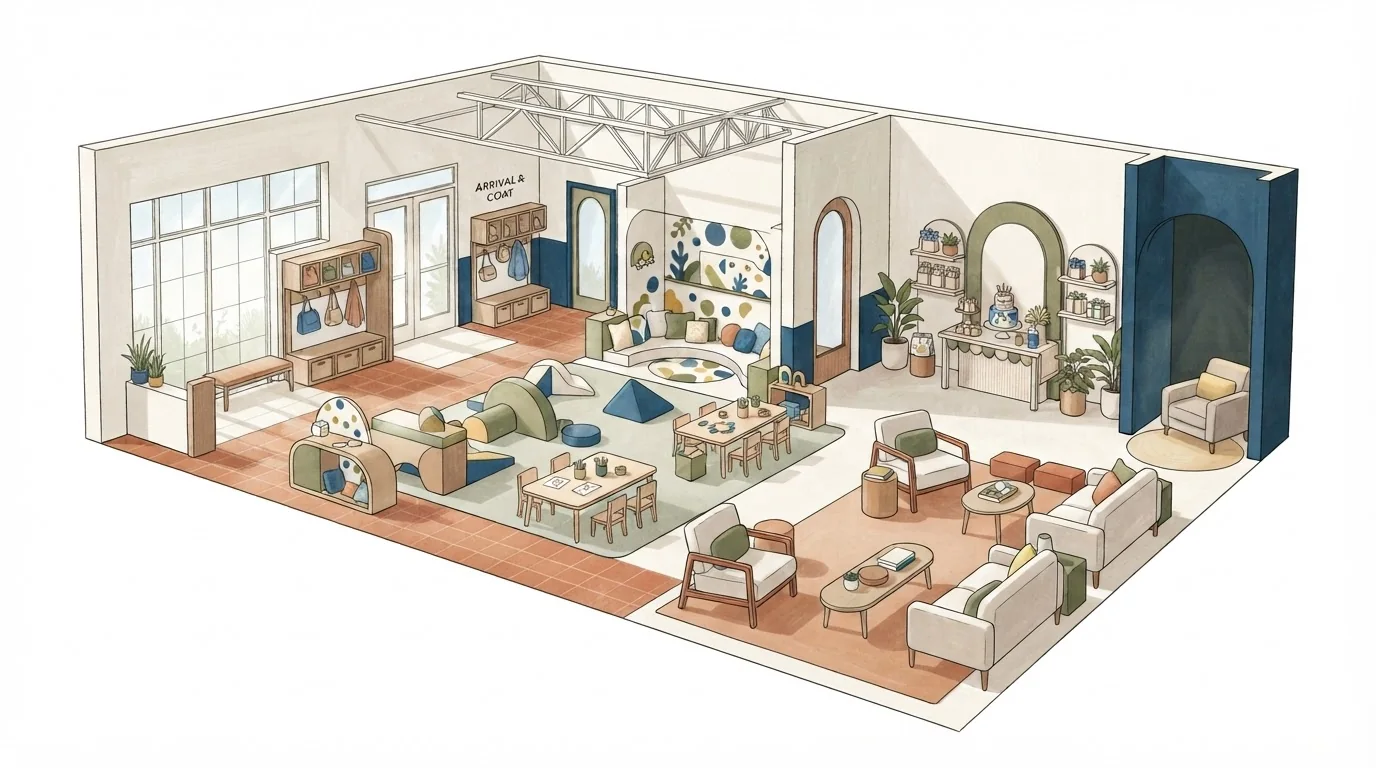
A single open room forces every arrival, coat, cake moment and adult conversation into the same patch of floor. That's fine for six children and two parents. It gets tight fast when three families arrive together, the entertainer starts a game, and someone needs to cut cake near a toddler. The brief for this article is simple: compare simultaneous use and age-separated activities. That means checking whether the children's activity can run while parents sit, talk or step out for a quiet break without crossing the play area. It also means checking whether older and younger children can do different things at the same time, or whether everyone is locked into one programme.
A venue can have a wonderful activity room and still fail the party because the entrance hall is a corridor, the cake table blocks the only exit, or there's nowhere for a parent to sit except a bench in the middle of the action. None of that is a dealbreaker by itself. It is information you need before you sign anything.
Arrivals, coats and buggies
Arrivals are the first pressure point. Ask where children and adults enter, where wet coats go, and whether buggies can be parked without blocking a fire exit. A venue that asks you to keep the entrance clear but provides no coat rack is telling you something. Check whether the reception area is separate from the play area, or whether arriving families walk straight through a game in progress. If the party starts at a busy time, ask how another group leaving would affect your arrival. You don't need a promise. You need to know the layout.
Plan a simple arrival routine: one adult greets at the door, one collects coats, one stays with early arrivals inside. If the venue has no coat storage, that becomes your job, so factor in a labelled bin or a named rack. This is practical, not fussy.
Cake, food and tables in the right place
Cake matters more than most venues admit. Ask where the cake table goes, who moves it, and what happens if the activity is still running. A table in the middle of the play area is an invitation for a collision. A table in a separate room is easier, but then check whether the children can move there safely and whether adults can stand nearby. Ask about food allergies, cleaning between courses, and whether you can bring your own cake. Terms depend on the particular written quote, so get answers in writing.
If the venue serves food, ask where it is prepared, where it is eaten, and whether children eat in the same room they play in. If the answer is yes, check the timing. Eating on the play floor is not a problem if the floor is cleaned and the toys are put away first. It is a problem if the next group is waiting.
Parents: seats, sightlines and a quiet break
Parents need somewhere to sit that isn't the ball pit. They also need to see their child without standing in the middle of a game. Ask how many adults the venue expects, where they sit, and whether there is a separate area for adults. Planet Physics, for example, describes separate activity spaces for children and designated areas for accompanying parents (Planet Physics: Science Party). That's one venue's description, not a market norm, but it shows the question is worth asking everywhere.
A quiet break for parents can be a corner with a kettle, a bench outside the main room, or a nearby café. It doesn't have to be glamorous. It has to be possible without leaving children unsupervised. If the only adult seating is along one wall with a blocked sightline, say so during the visit.
Age-separated activities and simultaneous use
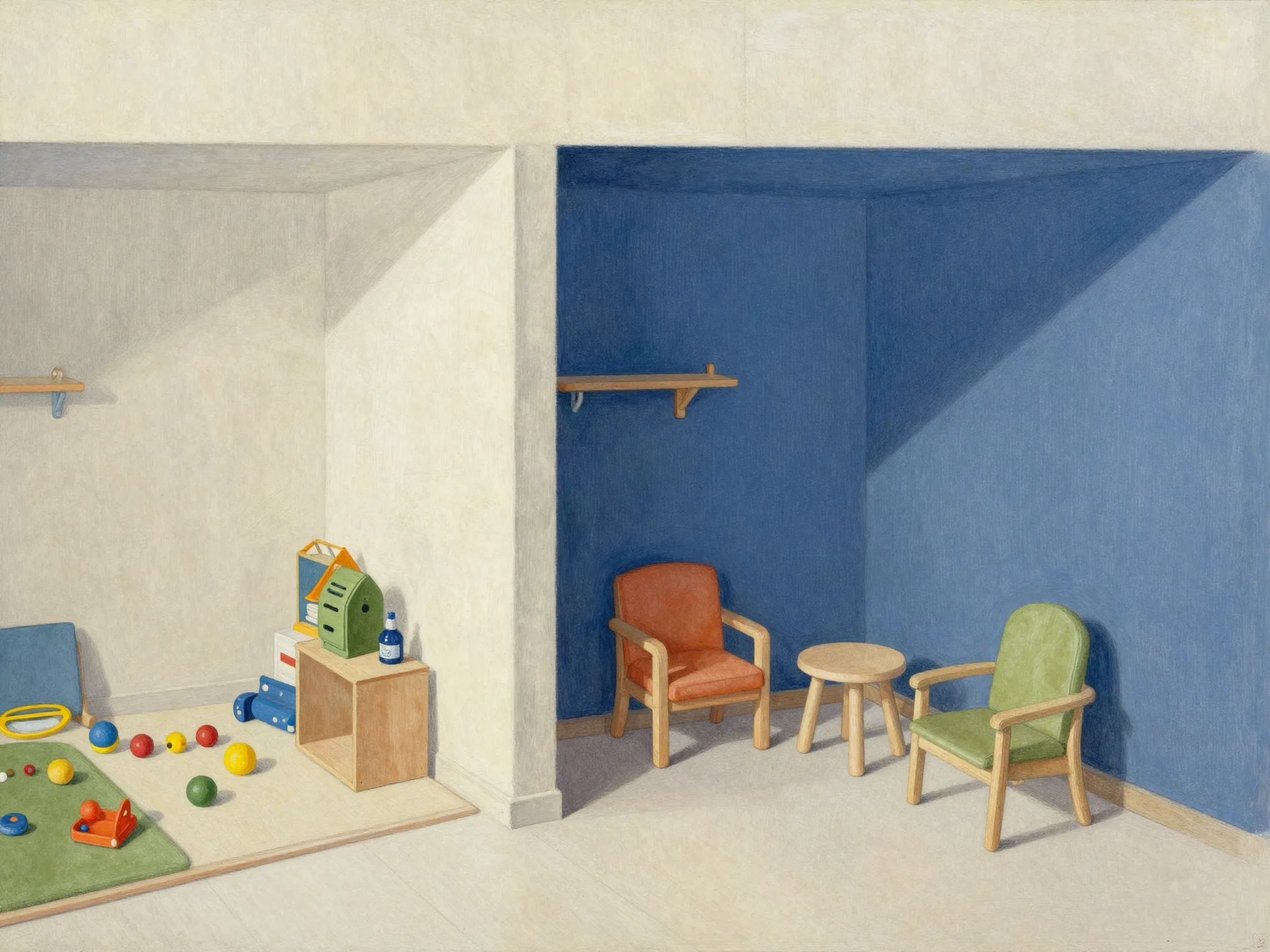
Siblings and mixed-age groups are normal. Ask whether a younger child can do a quieter activity while older children run a game, and whether both can happen at the same time. Some venues have one programme for everyone. That can work, but only if the age range is narrow. If you have a 4-year-old and a 10-year-old, a single programme may leave one bored or overwhelmed.
Simultaneous use also applies to the party itself. Can the entertainer run a game while parents set up cake in another area? Can a child who needs a break sit somewhere quiet without leaving the building? Can the birthday child open presents while others play? Each yes reduces crowding and stress. Each no adds a bottleneck you'll feel at the party.
A room-by-room site visit checklist
Use this table on the visit. Write short notes, not essays. If a venue can't answer, that's an answer.
| Area | What to check | Notes |
|---|---|---|
| Entrance | Separate from play area? Door width for buggies? Staffed? | |
| Coat and buggy storage | Racks, bins, covered space, not blocking exits | |
| Main activity room | Floor, sightlines, capacity for your guest count (example: 25 children) | |
| Second activity space | Available at the same time? Age-separated use allowed? | |
| Cake and food area | Table position, cleaning between courses, allergy handling | |
| Parent seating | Number of seats, view of children, quiet corner | |
| Toilets | Distance from play area, child-height sinks, nappy changing | |
| Quiet break space | Inside or nearby, supervised access | |
| Exit route | Clear, signed, not through the party | |
| Storage for gifts and bags | Secure, accessible at pick-up |
Questions to send before you visit
Email or message venues with these questions. Short answers save a wasted trip. For pricing-related questions, use blank fields: ask for a written quote with the total, what it includes, and whether tax is included or added. Terms depend on the particular quote, so don't compare a total with a deposit. Ask for availability and a written quote together, so you can compare properly. If you're weighing a science-themed party, our science party questions cover the specific things to ask. If budget is the main constraint, see our budget kids parties guide and our kids play centres collection for venue types to compare.
Send this information to suitable venues:
- Party date and preferred time window, plus one backup date
- Number of children and approximate number of adults
- Age range of children, including siblings
- Whether you need age-separated activities at the same time
- Whether you bring your own cake and food, or need them provided
- Any allergies or access needs
- Whether you need coat and buggy storage
- Whether you need a quiet break space for adults
- Your budget question, phrased as: please send a written quote showing the total, what it includes, and whether tax is included or added
- Your contact details and a request for availability and a written quote together
That's the whole job. Compare the answers room by room, not just the activity space. The venue that handles coats, cake, parents and a quiet corner is the one that makes the party feel calm.
Planning questions
Why is a single activity room often not enough for a children's party?
It forces arrivals, coats, cake and adult conversations into one space. This gets tight with many guests. The real question is whether children and adults can use separate areas simultaneously.
What should I check about age-separated activities and simultaneous use during a venue visit?
Ask if younger children can do a quieter activity while older ones run a game, and if both happen at once. Also check if parents can set up cake while the entertainer runs a game.