Why the photo is not the plan
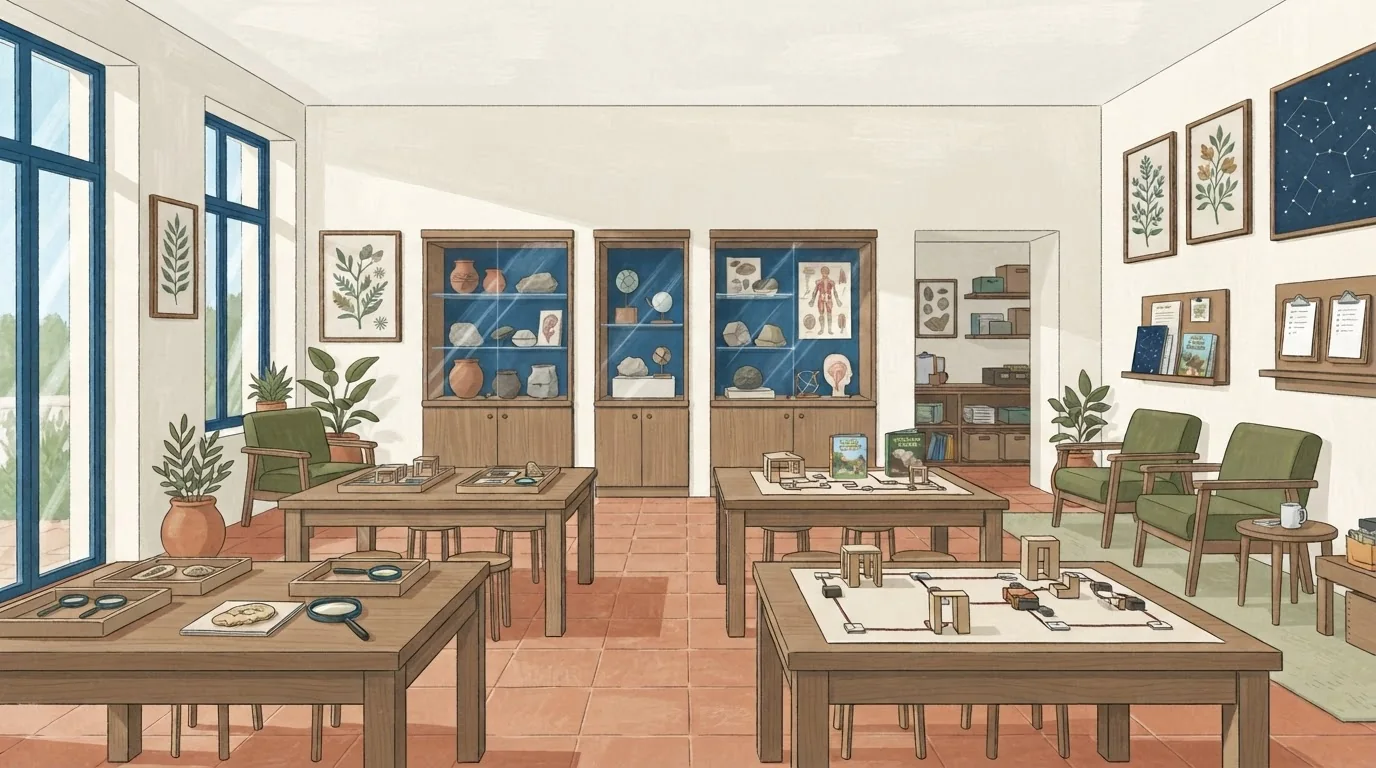
A science party can be two very different events. In one, children rotate through stations and handle materials. In another, a presenter runs a show while children watch. Both can be good. Only one matches a child who wants to be busy with their hands.
Ask directly: what percentage of the time are children participating rather than watching? For a mixed-age guest list, ask what the younger half does while the older half works on something more advanced. A good answer names the activities, the adult-to-child ratio, and what happens if a child refuses to join in.
If the answer is a list of topics rather than a description of what children do, ask again. Topic titles tell you the theme. They do not tell you whether your child will be holding something, waiting in line, or sitting still.
Participation versus demonstration, age by age
The meaningful question is not "is it hands-on" but "hands-on for which age". A five-year-old and a twelve-year-old need different levels of instruction, different tools, and different amounts of waiting. If the venue offers one programme for everyone, ask how it is adjusted.
Specific things to request:
- A short written outline per age band, not a general promise.
- The maximum number of children per facilitator, stated in writing.
- What a child does if they finish early or lose interest.
- Whether the birthday child gets a role, and what it is.
- Whether siblings of different ages are kept together or split.
If the answer is vague, that is information. Keep looking. A venue that cannot describe its own programme in writing is unlikely to adjust it on the day.
The quieter alternative
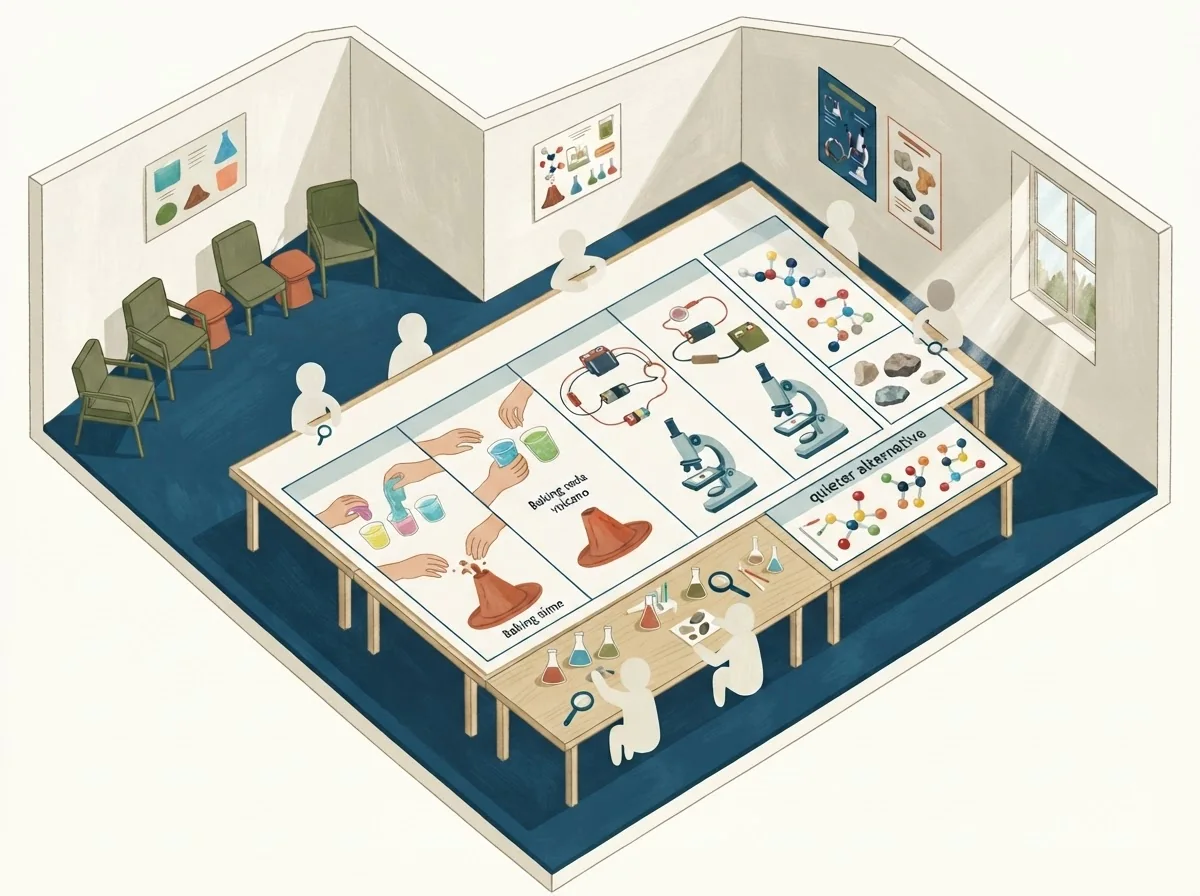
Some children hate noise, crowds, and being asked to perform in front of a group. A science party can still work. Ask whether there is a quieter room, a lower-stimulation time slot, or a parallel activity for a child who needs a break. This is not a special favour. It is a normal question that good venues answer without drama.
Ask too about the first ten minutes. Arrival is often the loudest part of a party. If a child needs a calm start, ask whether they can come in early, or whether there is a corner where they can settle before the group activity begins.
Planet Physics describes separate activity spaces for children and designated areas for accompanying parents, according to its science party page. That is one venue's description, not a standard for every museum.
The party room and the adults
Where does the party actually happen? A party room matters for cake, bags, and shoes. Ask:
- Is the party room private, shared, or a corner of a public cafe?
- How long do you have it, including setup and clearing?
- Can you bring your own cake and food, and is there a charge for that?
- Where do accompanying adults sit? Do they stay in the room or in a separate area?
- Is there space for a pram or a grandparent who needs a chair?
- Who clears the room at the end, and by when?
If adults are expected to stand in a corridor for two hours, that changes the guest experience more than the science show does.
A budget that survives the quote
Do not compare a per-child price with a flat fee until you know what each includes. A quote may cover facilitation only, or room hire, materials, and cake space. Ask whether the quoted amount is per child or per party, and whether it includes VAT. Tax as quoted, and ask which amount it applies to.
Here is an example, not a market norm: 15 children, a two-hour slot, one facilitator, and a party room. That structure is what you are pricing. The venue may quote a flat fee or per child. You cannot know which is better value until both quotes show the same lines.
Watch for the lines that quietly move. Extra time in the party room, a second facilitator, or a cleaning charge can change the total more than the headline figure. Ask for the total you would actually pay, in writing, and for the date you want.
The age-and-activity comparison sheet
Use this sheet for each venue you contact. Fill it in from written answers, not from a phone call you half remember.
| Question | Venue A | Venue B |
|---|---|---|
| Age bands offered | ||
| Participation vs demonstration, by age | ||
| Maximum children per facilitator | ||
| Quieter alternative available? | ||
| Party room type (private/shared) | ||
| Time in party room, including setup | ||
| Can you bring cake and food? | ||
| Where do accompanying adults sit? | ||
| Flat fee or per child? | ||
| What the quote includes | ||
| VAT included? |
Add a final column for "what the venue would not confirm". That column often decides the booking. If a venue leaves three cells blank, that is not a small detail. It is a reason to ask again or to compare with a venue that answers.
What to send to suitable venues
When you contact a museum or science centre, send one message with the facts they need to quote accurately:
- Preferred date and a backup date.
- Start and end time you want, including setup.
- Number of children and their age range.
- Number of accompanying adults.
- Whether you need a private party room.
- Whether you will bring cake or food.
- Any access needs, including a quieter space.
- Your budget question: ask for a written quote showing what is included and whether VAT is included.
Ask for availability and a written quote together. Availability without a quote is not a plan. A quote without availability is not a booking. Both belong in the same reply, and you can compare venues on the same lines.
One last check before you commit. Read the programme outline next to your child's age and ask yourself whether that is the party they would describe if you asked them afterwards. If the answer is no, keep asking.
Two useful next steps: Teen birthday venues: let the activity set the group size and A children’s party budget starts with the guest rules.
For a cultural setting with an activity room, compare museum venues and ask which rooms the party can actually use.
Planning questions
How do I choose a science party when the guests are different ages?
Ask what each age group actually does, not whether it is hands-on. Request a written outline per age band, the maximum children per facilitator, and what younger guests do while older ones work. If one programme covers everyone, ask how it is adjusted.
What should I check about the party room and where adults sit?
Ask whether the party room is private, shared or a corner of a public cafe, how long you have it including setup and clearing, whether you can bring cake and food, and where accompanying adults sit. Adults standing in a corridor changes the guest experience.