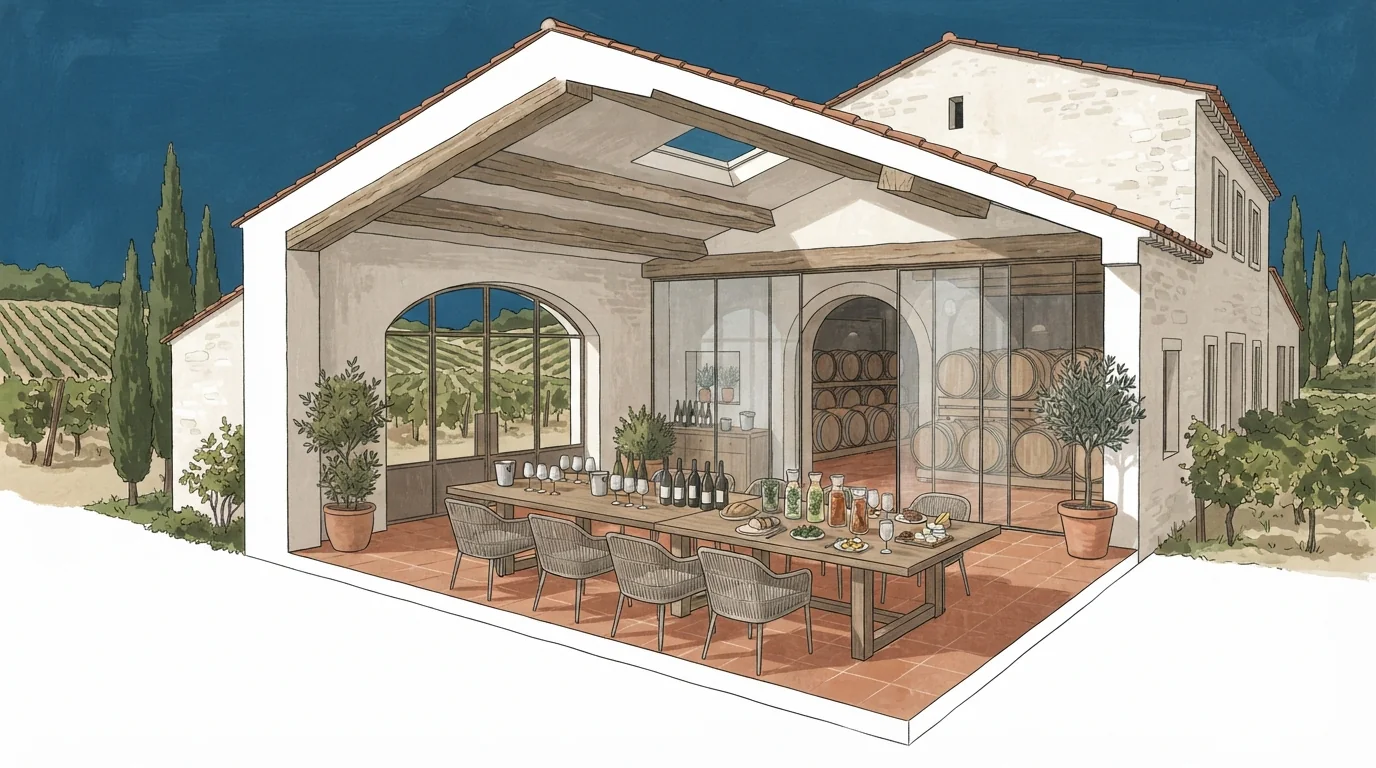
Build the guest profile before you email anyone
Write down three numbers: total guests, guests who drink alcohol, guests who don't. Add dietary needs separately, because a vegetarian guest and a non-drinking guest are two different questions. Then note the reason. Health, pregnancy, religion, medication, recovery, taste preference and driving home all lead to different needs. One guest may want zero alcohol but still enjoy the smell, the talk and the food. Another may prefer a plain table away from the bar. Ask, don't assume.
Also decide what the event is for. If it's a birthday, the tasting is the entertainment. If it's a corporate dinner, the tasting may be a short pre-dinner activity. The non-drinking plan changes with the format. A standing reception with a single pour is a different job from a seated two-hour session, and the questions you send should match the shape of the evening you actually want.
What to ask about non-alcoholic alternatives
A tasting house works with liquids. So the first question is simple: can you serve the same number of pours as the wine flight, but without alcohol? Ask what those pours would be, whether they are made in-house, and whether they match the pace and glassware of the wine service.
Useful specifics:
- Sparkling water with citrus or herbs
- Tea or herbal infusion served warm or iced
- Fruit juice or verjus
- Dealcoholized wine, if the venue stocks it
- Simple syrup and soda with a bitter element
Ask whether the alternative flight is included in the per-person quote or priced separately, and whether the venue charges the same for it. Get that in writing. Don't assume the non-drinking option is cheaper. Preparation, glassware and staff time all have a cost, and a venue may price a thoughtful alternative flight close to the wine flight.
If the venue cannot offer an alternative flight, ask whether you may bring your own non-alcoholic drinks and what corkage or service terms apply. Some houses agree, some don't. That answer belongs in the quote, not in a hallway conversation.
One more question worth sending early: how the venue handles a guest who starts with wine and switches to the alternative midway. Some places can adjust on the night, some need the count fixed in advance. Knowing which one you're dealing with saves an awkward conversation at the table.
Food, pacing and the seated conversation
Food does more work than most hosts expect. It gives non-drinkers something to do with their hands, slows the room and makes the event feel like a meal rather than a series of pours. Ask for a menu that works with and without wine: bread and oil, cheese, olives, grilled vegetables, grains, something warm. Confirm allergens and a vegetarian or vegan plate in the same written quote.
Pacing matters. A flight of six pours in ninety minutes leaves non-drinkers watching. A flight of four pours with a seated discussion between each one gives everyone a role. Ask whether the host can lead short questions, whether the winery guide stays for the whole session, and whether there is a seated area with enough chairs for every guest.
If the group is large, ask about splitting into two tables, one with wine and one without, or keeping everyone together with different glasses. Both work. Together is usually better for a celebration, separate is better if the non-drinkers want a quiet conversation. A site visit or video walkthrough helps here, especially in Nemea, where rooms and terraces differ a lot. Agiorgitiko is cultivated in Nemea, according to Visit Greece, so guests may expect a regional focus. That source describes grape varieties, not event packages.
Transport, timing and the end of the evening
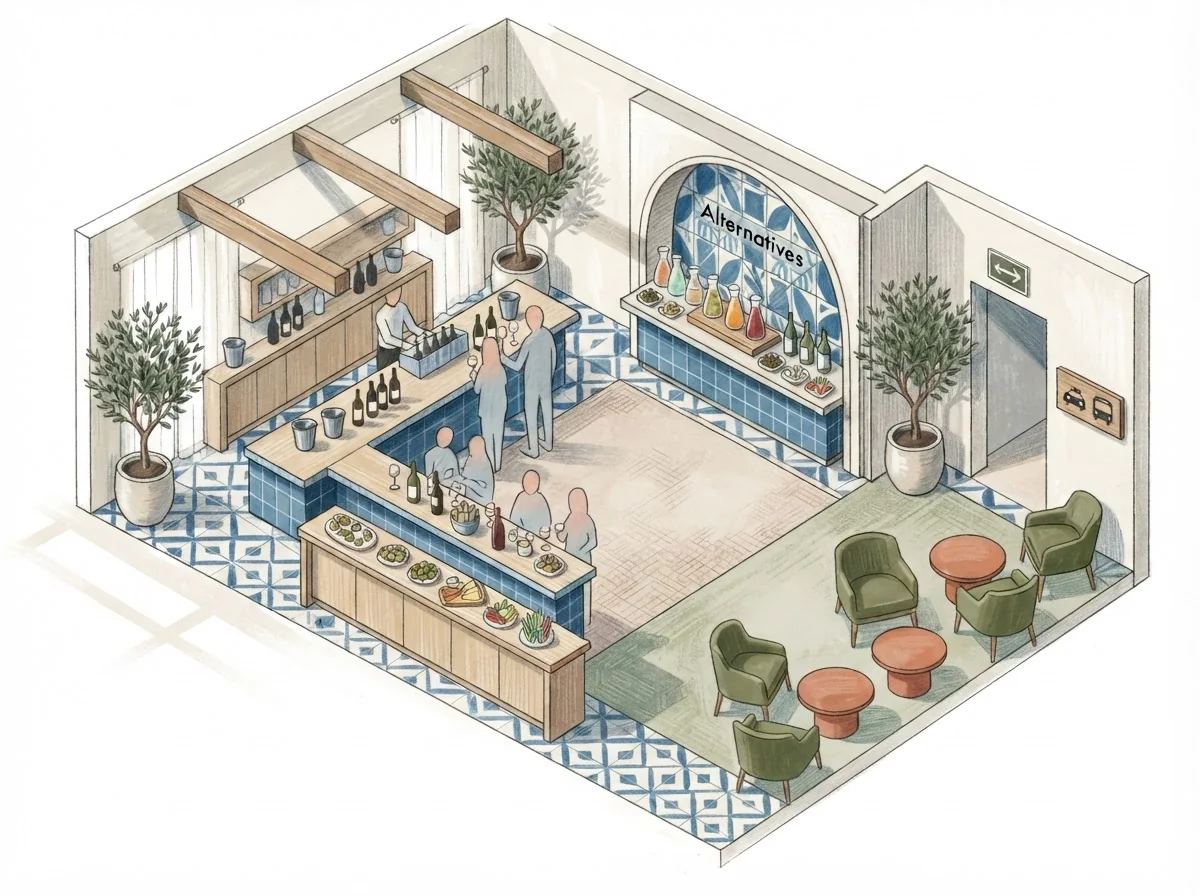
Driving is the quiet problem. If some guests drink and some don't, the non-drinkers often become drivers by default. That is not an inclusive plan. Ask about a minibus, a shuttle, a taxi arrangement or a designated driver rota agreed in advance. If the venue is rural, confirm the pickup point and the last departure time in writing.
Also ask when the event ends and whether the venue has a hard stop. A tasting that runs long gets expensive and tiring. Build in a soft ending: coffee, water, a final plate, a clear time to leave. If guests are staying overnight, ask whether the venue can share a list of nearby places to stay, and whether the return trip the next morning is easier to arrange from a specific point. Small logistics like this decide whether people remember the evening fondly or remember waiting outside.
Budget lines that include everyone
Use a simple worksheet with blank fields. Don't fill in numbers you haven't been quoted.
| Line | What to write |
|---|---|
| Guest count | Total / drinking / non-drinking |
| Tasting fee | Per person or per group, tax as quoted |
| Alternative flight | Included or separate, tax as quoted |
| Food | Per person, dietary plates, service terms |
| Transport | Vehicle, pickup, return time, who pays |
| Extras | Corkage, extra hour, breakage, gratuity policy |
| Deposit and cancellation | Amount, date due, refund terms |
Ask which amount the tax applies to and whether service is included. Compare total cost, not headline price. If the budget is tight, a shorter flight with better food usually beats a longer flight with nothing to eat.
A short brief to send to venues
Copy this, fill the blanks and send it to three or four venues. Ask for availability and a written quote together, so you can compare like with like.
Inclusive tasting-event brief
- Date, start time and end time: ______
- Guest count: total ______, drinking ______, non-drinking ______
- Non-drinking reason, if guests wish to share: ______
- Dietary needs: ______
- Format: seated / standing / mixed ______
- Wine flight length: ______
- Alternative flight: yes / no, what is served ______
- Food: menu style, dietary plates, serving time ______
- Seating: chairs for every guest, quiet area yes / no ______
- Transport: venue help, pickup point, return time ______
- Budget: per person or total, tax as quoted ______
- Questions: corkage, extra hour, deposit, cancellation ______
Send the same brief to every venue and ask for the answer in writing. That way the non-drinking guests are part of the plan from the first email, not an adjustment on the night.
Two useful next steps: A winery event needs a production-day plan and A cooking team event: participation or demonstration?.
Planning questions
How do I decide whether the whole event still feels like a tasting for guests who don't drink?
Ask the venue to serve the same number of pours as the wine flight without alcohol, matching pace and glassware. Then plan food, seated discussion and short host-led questions so non-drinkers have a role, not just something to hold.
How should transport and timing be planned so non-drinking guests aren't the default drivers?
Arrange a minibus, shuttle, taxi or a designated driver rota in advance, and confirm pickup point and last departure in writing. Set a clear end time with a soft ending such as coffee or a final plate.