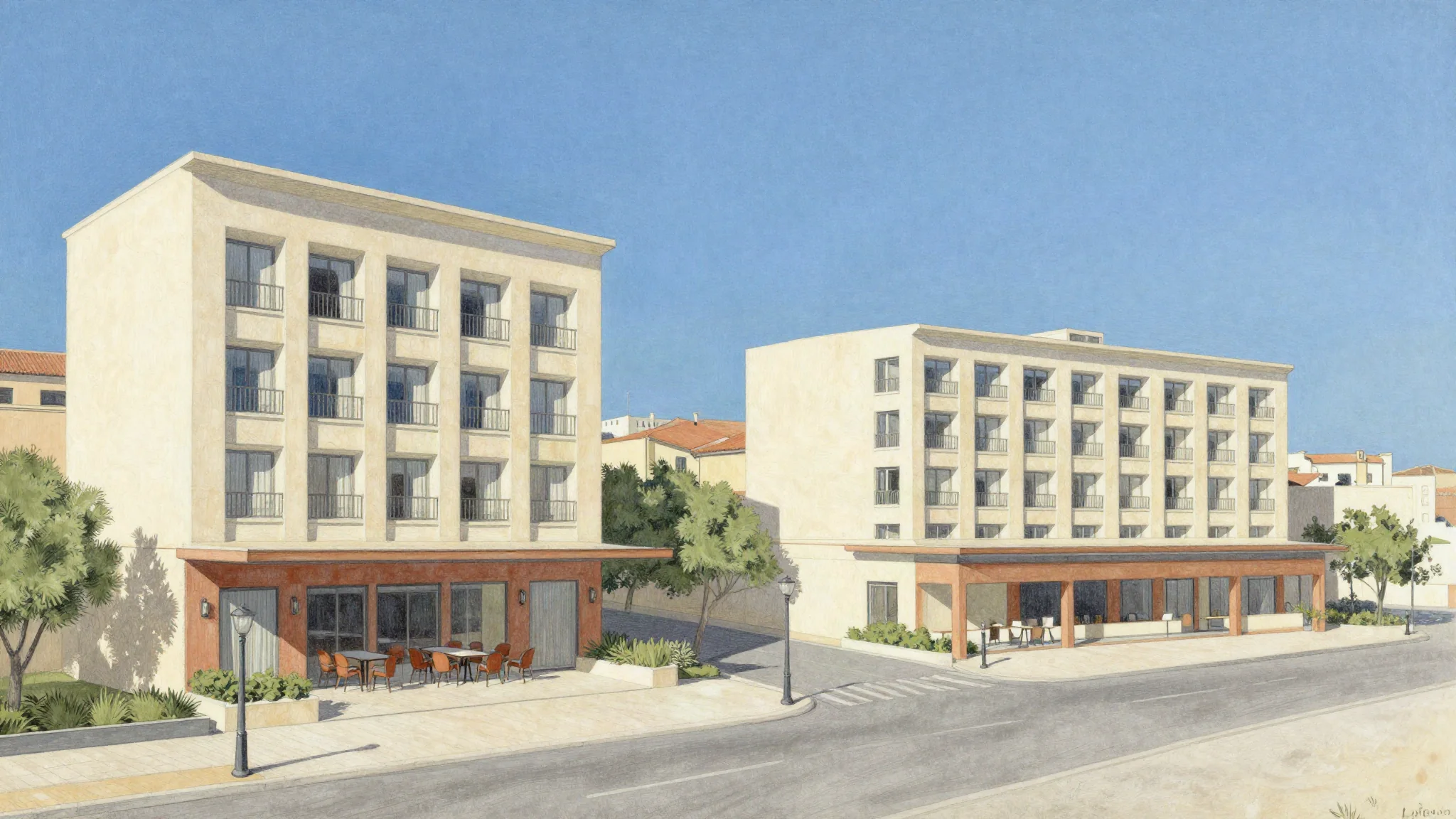
Picture a 180-delegate conference in Thessaloniki. The main hall sits in one hotel, the gala dinner is somewhere else, and three speaker groups sleep in different districts. Every move between them costs time, goodwill and money.
The city offers a wide spread of event spaces with different histories, facilities and settings, as the Thessaloniki Convention Bureau venue directory shows. That variety is useful, but it also means no single venue type fits every programme. The decision hinges on how many times your delegates must move, and whether those moves add value or just friction.
Single base versus split locations
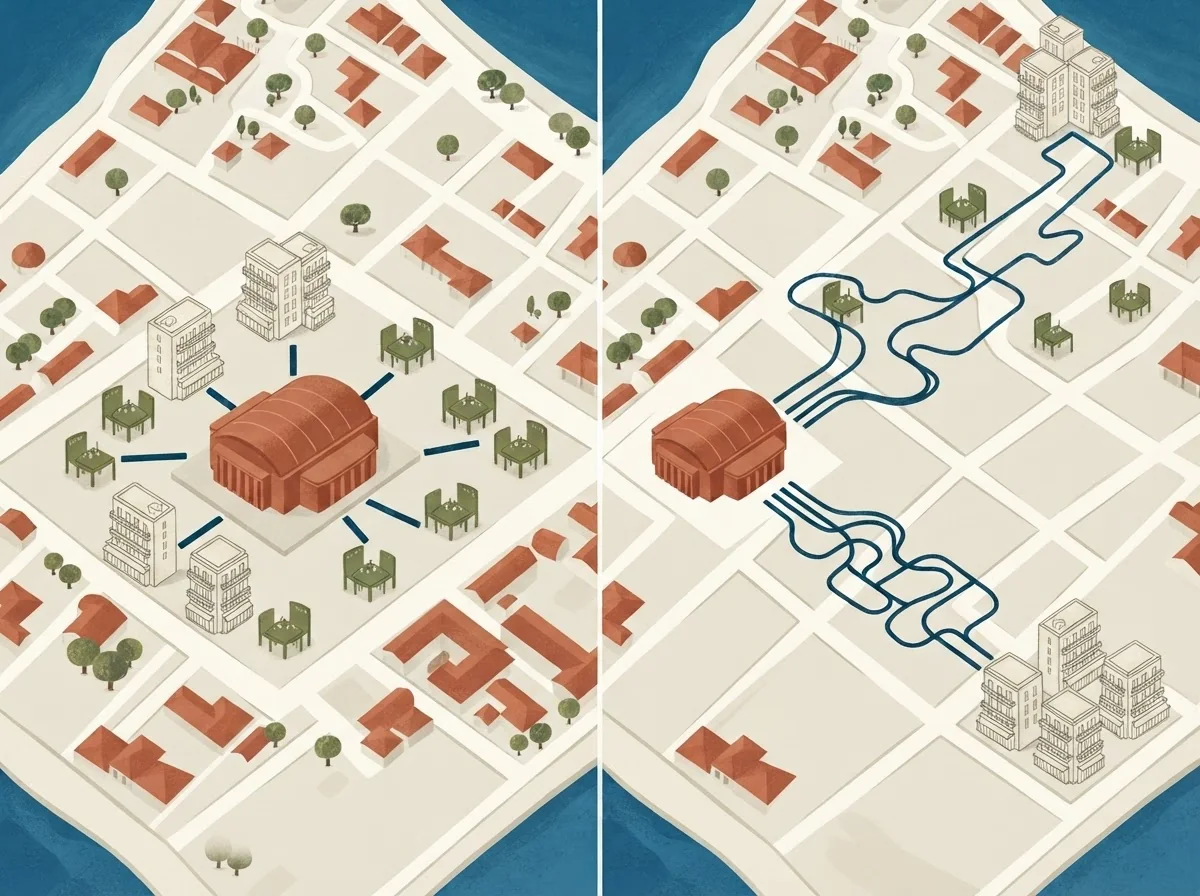
A single-base plan puts plenary sessions, breakout rooms, catering and often accommodation under one roof or within one short walk. You trade some novelty for control: one operations contact, one set of load-in rules, one billing conversation. The honest tradeoff is that the main hall may be larger or plainer than a standalone venue you liked, and the dinner menu may follow the hotel's standard rather than a restaurant's signature style.
A split plan uses a dedicated conference hotel for the working day and separate locations for dinners, receptions or workshops. It can give each part of the programme a better room. It also multiplies the things you must coordinate: transport, timings, signage, speaker support and audio-visual checks in more than one building. Neither plan is automatically cheaper or better. Total-cost arithmetic decides that, and it depends on your own quote.
Build a programme-location matrix
The matrix below is the core tool for this decision. Fill it in before you shortlist anything. Do not guess travel times. Instead, ask each venue or your transport supplier for a written estimate for the exact route at the exact time of day. Label every number as an estimate until it is confirmed in a quote.
| Programme block | Delegates (example) | Preferred base | Alternative location | Route and timing source | AV and setup needs | Catering format | Contract and access notes |
|---|---|---|---|---|---|---|---|
| Registration and welcome coffee | 180 | Main hotel foyer | Separate lobby | Ask venue for written estimate | Signage, cloakroom, power | Standing coffee | Access from what time? |
| Plenary sessions | 180 | Main hall | Auditorium | Ask venue for written estimate | Stage, microphones, recording | Water service | Rehearsal window? |
| Parallel workshops | 60 per room | Breakout rooms | External meeting space | Ask venue for written estimate | Screens, flipcharts | Mid-morning break | Room reset time? |
| Lunch | 180 | Hotel restaurant or ballroom | Nearby restaurant | Ask venue for written estimate | Queue management | Buffet or set menu | Dietary handling? |
| Gala dinner | 180 | Hotel ballroom | Standalone venue | Ask venue for written estimate | Stage, lighting, sound | Seated dinner | Load-in and curfew? |
| Speaker briefing | 12 | Boardroom | Green room | Ask venue for written estimate | Monitor, printer | Snacks | Quiet and lockable? |
| Departure transfers | 180 | Main entrance | Multiple pick-up points | Ask transport supplier | Signage, staff | Not applicable | Luggage storage? |
Once the matrix is filled in, count the journeys. If delegates move twice in a day, that is usually manageable. If they move four times, you are running a logistics operation with a conference attached. The matrix shows you where a single base removes a journey entirely and where a split genuinely improves the room.
What a room block does to the base decision
Accommodation often decides the base more than the meeting room does. If most delegates stay in the same hotel as the plenary, morning sessions start on time and informal networking happens in the lift queue. If they stay across several hotels, you need clear walking routes, meeting points and a named contact for each property. Read our guide to organising a room block before you commit, and ask each hotel how it handles sub-blocks, deposits and release dates.
A single-base plan usually means one room block, one set of check-in times and one place for delegates to leave luggage. A split plan may need two blocks or a block plus individual bookings. That is not a reason to reject a split plan. It is a reason to build the matrix first and see how many hotel-related tasks you are creating.
Capacity questions that change the shortlist
Capacity is not one number. A venue that seats your plenary comfortably may fail at lunch, at the poster session or at the gala. Ask about capacity in each configuration you actually need: theatre, cabaret, classroom, banquet and standing reception. Our explainer on conference capacity walks through the difference between headline capacity and usable capacity, including staging, AV positions and service routes.
For each candidate, get written answers to these questions:
- What is the maximum capacity in each layout we need, and what furniture or staging reduces it?
- Which spaces are exclusively ours, and which are shared or bookable by another group?
- What are the load-in windows, rigging rules and power limits?
- What is included in the day rate, and what is quoted separately?
- Which amounts are subject to tax, and is tax as quoted included or added?
- What are the deposit, cancellation and final headcount deadlines?
- Who is our on-site contact during the event, and who handles AV?
When to split and when to stay put
Split the programme when a separate location makes a specific moment better: a dinner in a space with its own character, a workshop that needs specialised equipment, or a reception that gives delegates a reason to step outside the hotel. Stay in one base when the programme is dense, when speakers arrive and depart at different times, or when you have a small team and no dedicated transport coordinator.
Do not assume a single base is always cheaper. Do not assume a split plan is always more interesting. The matrix and the written quotes decide. If the numbers are close, choose the plan with fewer uncontrolled variables: fewer routes, fewer contacts, fewer handovers. Your delegates will remember a conference that ran calmly more than they will remember a clever venue combination that kept everyone waiting.
What to send venues
To get comparable answers, send every shortlisted venue the same brief. Include the programme matrix, your example delegate count, the dates you are considering, the room layouts you need, the catering formats, the accommodation requirement, and the access times for setup and breakdown. Ask for a written quote that separates room hire, catering, AV, accommodation and any service charges, and ask which items are subject to tax. Ask for availability and a written quote together, so you can compare real options rather than tentative interest.
If you want to narrow the field first, browse conference hotels in Thessaloniki and check each property against the matrix. Then send the brief, wait for written answers, and compare like with like. The right base is the one that makes your programme easier to run, not the one that photographs best.
Planning questions
How does the programme-location matrix guide the single-base versus split decision?
List where each programme activity happens and which groups must move between locations. Compare the transfers, coordination and room benefits of each option; a fixed number of journeys does not establish whether a plan works for your delegates.
When should a split plan be chosen instead of staying in one base?
Split when a separate location makes a specific moment better, such as a dinner with character, a workshop needing specialised equipment, or a reception that gives delegates a reason to leave the hotel.