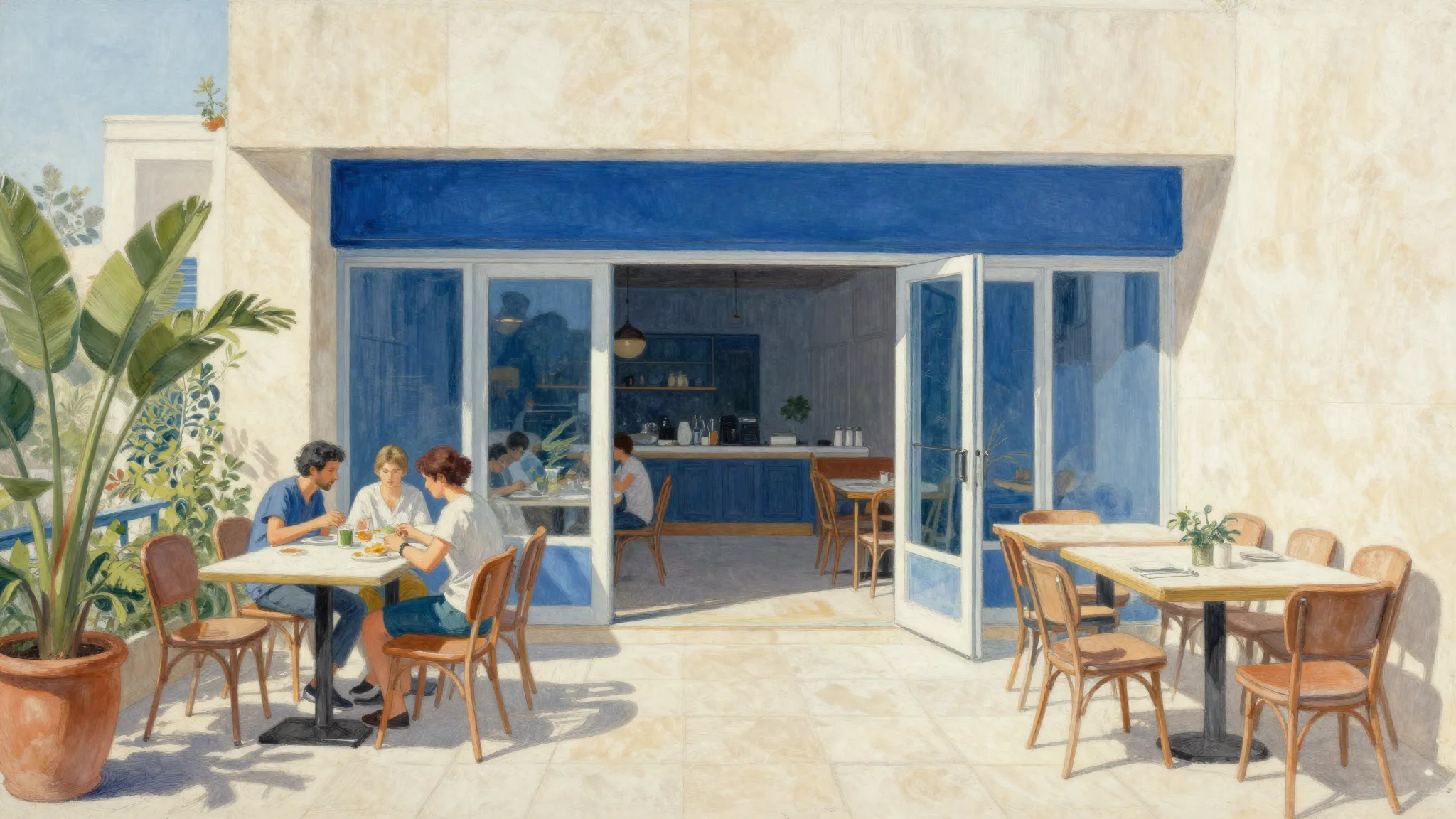
Why one long table fails a reunion
A long table works when everyone stays put. Reunions rarely do. Guests arrive at different times, greet people they have not seen in years, and move between clusters. A fixed seating plan makes each move awkward: you climb over knees, abandon a conversation, or stay put and miss someone.
That does not make long tables wrong. It makes them a choice with a cost. If the group is tight, the meal is the main event, and people are happy to sit for two hours, a long table can be excellent. If the point is mixing, it competes with the room.
Ask yourself which behavior you want to encourage. A reunion where people circulate needs floor space and several anchor points. A reunion where people sit and talk needs comfortable chairs and a layout that keeps sightlines open. You cannot optimize for both with the same furniture plan.
Fixed meal versus mixed seating and standing
A fixed meal is easier to quote and easier to schedule. Everyone eats at the same time. The tradeoff is that circulation stops during service. Mixed seating and standing keeps people moving, but it complicates the food, the staffing and the timeline. You need enough seats for guests who cannot stand for long, and enough standing space that people are not holding plates in a corridor.
For an example, assume 60 guests. If 20 need a seat throughout, plan at least 20 seated places, not 20 chairs scattered around the room. The remaining 40 can rotate between tables, high tops and a standing zone. That is an illustration, not a market rule. The right split depends on your actual guest list.
Ask the venue how it has handled mixed formats before, and ask for a written description of the room setup. Do not accept a verbal plan that changes on the night.
Arrival zones and the first twenty minutes
The first twenty minutes decide how the room feels. If there is only one entrance and one table, arrivals collide. Plan at least two zones: a greeting point near the entrance and a second zone further in where people can put down a drink and start a conversation.
A cloakroom or bag drop helps more than it sounds. Reunions often involve people carrying cameras, gifts or printed photos. If there is nowhere to put those down, they become a reason to stand still.
Ask where the venue wants guests to enter, where coats go, and whether there is a separate area for early arrivals. If the answer is one door and one room, you can still work with it, but you will need to manage the flow yourself.
Seats for guests who cannot stand for long
Circulation is not an excuse to leave people standing. Some guests will need a seat for the whole event, and some will need one after an hour. This is a practical requirement, not a detail.
Map the room with seated places marked. Check that seated guests are not isolated at the edge of the room, and that they can see and hear what is happening. A seat that faces a wall is technically a seat, but it removes the guest from the event.
Ask whether chairs can be moved during the evening, and who moves them. If staff reset the room at a fixed time, that changes how you plan the middle of the night. Get it in writing.
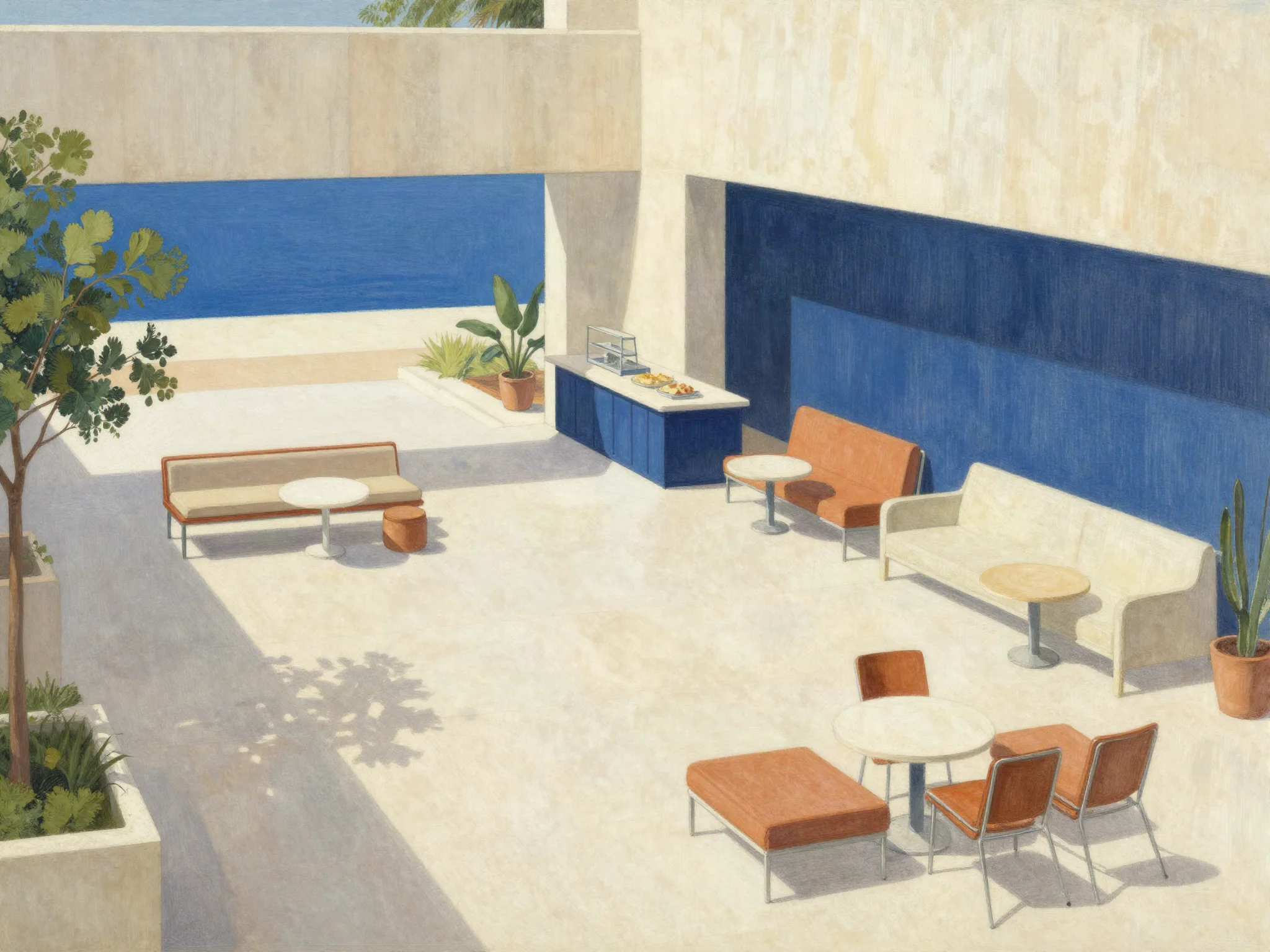
Drinks, food and the schedule that keeps people moving
A fixed meal and a circulating room pull in different directions. One solution is to separate the two: a standing reception first, then a seated meal, then standing again. Another is a meal with flexible courses, where people can move between courses.
Both have costs. A two-part evening needs a venue that can change the room setup, or two connected spaces. A flexible meal needs staff who can serve without turning the room into a traffic jam.
Ask how food is served, where guests queue, and whether drinks are passed or collected from a bar. Queues at a single bar are the most common way a good reunion loses its rhythm. If the venue cannot add a second service point, plan the schedule around one.
What to ask before you shortlist
Use the checklist below as a working document. Fill it in for each venue and compare answers side by side. Blank fields are fine. Guessed answers are not.
| Item | What to ask | Your notes |
|---|---|---|
| Arrival zone | Where do guests enter, and is there a second area for greeting? | |
| Cloakroom | Is there a staffed or self-service place for bags and coats? | |
| Seated places | How many fixed seats, and can they be moved? | |
| Standing capacity | What standing area is included in the quote? | |
| Circulation path | Is there a clear route between entrance, bar and tables? | |
| Bar service | One bar or two? Passed drinks or collected? | |
| Food format | Fixed meal, stations, or flexible courses? | |
| Room reset | Can the setup change during the event, and who does it? | |
| Accessibility | Step-free route to seated places and toilets? | |
| Sound | Can guests talk without shouting in the main zones? | |
| Timing | When can you access the room for setup? | |
| Written plan | Will the venue confirm the layout in writing? |
This checklist is editorial guidance, not a venue standard. Terms depend on the particular written quote, so ask what is included and what is charged separately.
Budget and quote questions that change the layout
Layout decisions have cost consequences. A standing reception may need more staff or more glassware. A seated meal may need more tables and a longer service window. If you are comparing quotes, put the layout assumptions in writing next to the price.
Ask whether the quote covers the room as described, and which amount any tax applies to. Say "tax as quoted" in your own notes, and ask the venue to confirm the basis. Do not assume one format is cheaper until you have the total for your own guest numbers and schedule.
The arithmetic is similar even when the occasion is not.
The information to send venues
When you contact venues, send the same short brief to each one so the answers are comparable. Include: the occasion, an estimated guest count, the date or date range, the arrival time, the time you need the room, how many guests need a fixed seat, whether you want a fixed meal or a mixed format, whether you need a standing area, and any accessibility requirements. Ask for availability and a written quote together, plus a written room layout and a list of what is included. That brief gives a venue enough to answer properly, and it gives you a fair basis for comparison.
Two useful next steps: A family reunion in the Ionian Islands needs one clear base and Private dining in Athens: how private is the room?.
Planning questions
How can we decide between a fixed meal and a mixed format for a reunion where guests want to circulate?
Weigh what you want to encourage: sitting and talking or mixing. A fixed meal stops circulation during service; mixed seating and standing keeps people moving but needs enough seats for those who cannot stand long.
What should we check about seating when some guests need to sit throughout the reunion?
Plan enough fixed seats for those who cannot stand long, place them so guests can see and hear, and ask if chairs can be moved and by whom. Get the layout in writing.