Start with the awkward five minutes
If you are still choosing the occasion format, our collection of event spaces for your shortlist covers the guest-list and tone questions first.
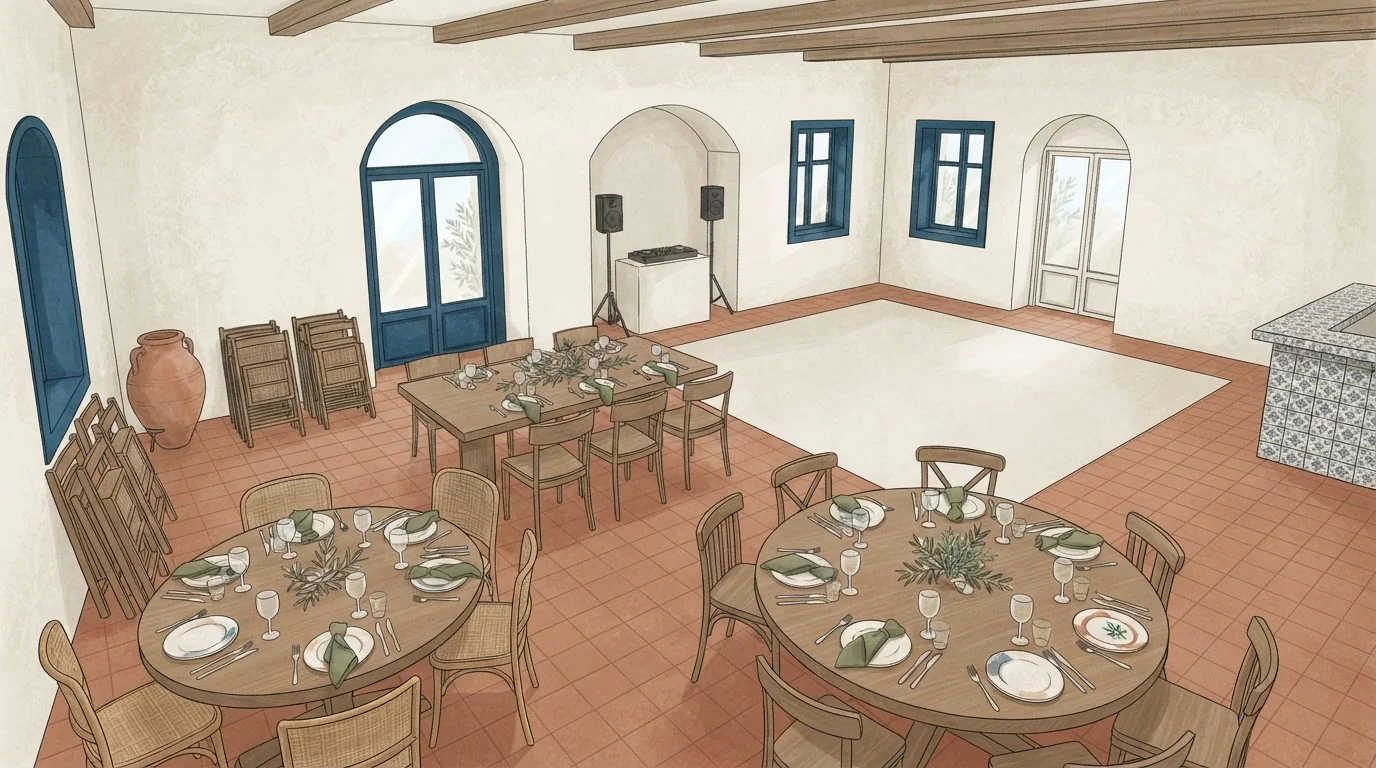
Picture this: 70 guests, one long table, a speech at 21:00, and a dance floor that needs to appear by 22:00. The room can do both jobs, but only if someone plans the change. That change is the decision. A single room for dinner and dancing is not a compromise if you treat furniture, sound and timing as one plan.
What one room has to do well
A restaurant room earns its place when conversation works before the music starts and the music works after the plates are cleared. Before you fall for a view, ask how the room behaves at both volumes. Walk it at midday and again with the sound on, if the venue allows a second visit.
- Hard floors and glass make a speech crisp and a dance set loud. Soft furnishings do the opposite.
- A long rectangular room can split into dining and dancing zones. A square room often cannot.
- Check where the speakers sit relative to the oldest guests. Nobody wants to shout at their own birthday.
- Ask whether the venue has a house sound limit and who controls it.
That last point matters more than any playlist. Sound rules depend on the building, the neighbourhood and the licence, so get the answer in writing for your date. Ask whether the limit applies to amplified music, to live instruments, or to both. Ask who measures it and what happens if the room goes over.
The Ecali Club in Athens lists member-oriented art exhibitions, film nights, music nights and food-themed events, and notes that public hire requires separate confirmation. That is a useful reminder: a venue's own programme does not tell you what is available to you. See Ecali Club: exclusive events.
The dinner-to-dancing room change
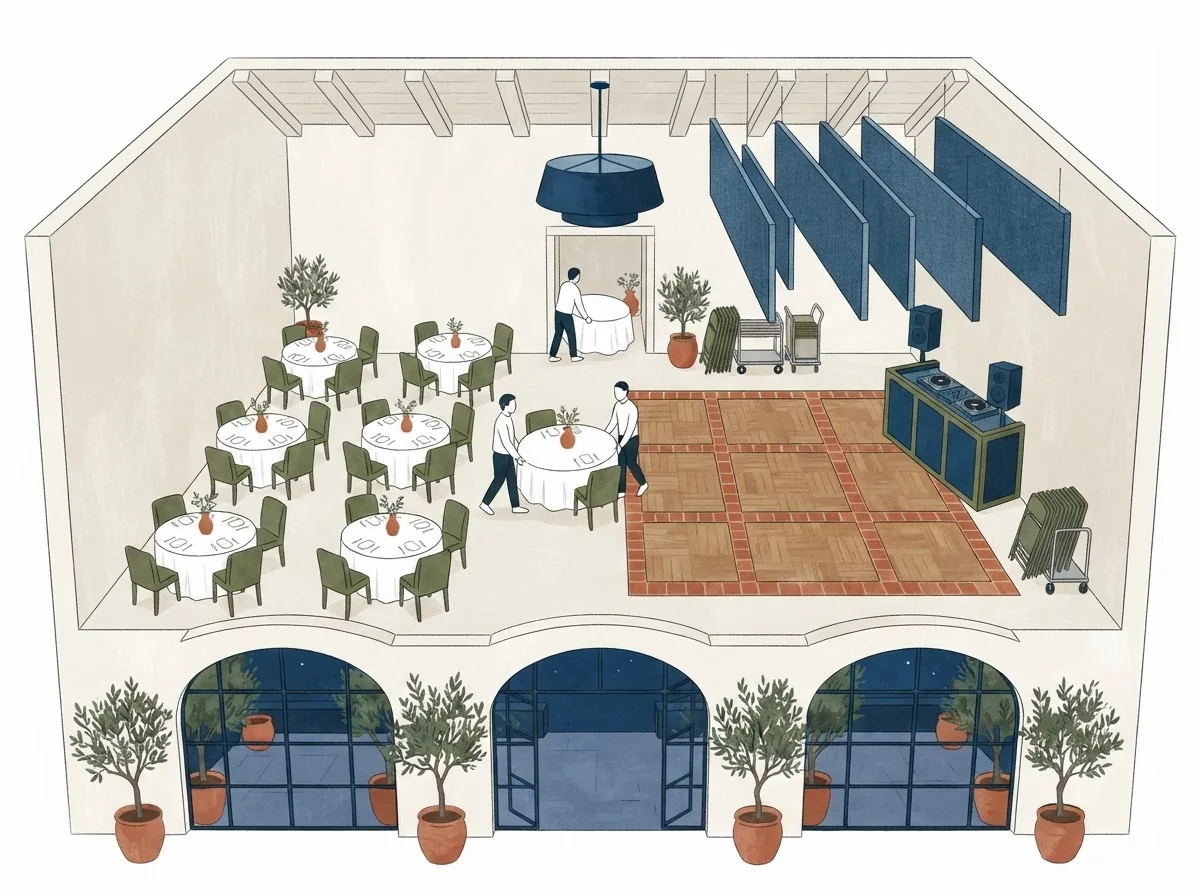
Most single-room plans fail because nobody owns the transition. Someone has to move tables, clear glassware, reset lighting and start the first track. Decide who that is before you sign anything. If the venue's team does the reset, ask how many people are assigned and whether they are already on shift that night.
A realistic example, not a market norm: dinner service ends at 22:00, the room resets in 25 minutes, and dancing runs until the venue's stated finish. Build the schedule backwards from the finish time, not forwards from the welcome drink. Then add ten minutes of slack, because resets rarely run early.
Use this checklist with the venue manager. Print it and fill it in together.
| Item | Question to ask | Your answer |
|---|---|---|
| Furniture move | Which tables and chairs move, and who moves them? | |
| Storage | Where do stacked chairs and tables go during dancing? | |
| Floor | Is the dance area already clear, or does it need a temporary floor? | |
| Sound | Who operates the music, and what is the room's limit? | |
| Lighting | Can house lights dim separately from service lighting? | |
| Timing | What is the latest music finish on my date? | |
| Buffer | How many minutes are built in for the reset? | |
| Speaker position | Where do speakers sit relative to dining tables? | |
| Power | Where are the sockets for any band or DJ equipment? | |
| Access | Can equipment come in without crossing the dining room? | |
| Staff | Who is the single point of contact during the change? | |
| Plan B | What happens if the reset runs late? |
If the venue cannot answer the sound and timing rows, treat that as a gap, not a detail.
Sound, timing and the honest tradeoff
A room that sounds great for a live band will usually feel loud for a seated dinner. You can soften this with speaker placement, a smaller band, or a shorter amplified set. You cannot fix it with a playlist alone. If the room is tiled or has a low ceiling, expect the sound to bounce; ask whether the venue has felt panels, curtains or carpet that can be closed or opened.
Ask for the venue's music finish time in writing. Do not assume a curfew applies, and do not assume it does not. Terms differ by building and licence. If a neighbour complaint can end the night early, you want that stated up front. Ask, too, whether the finish time changes on weekends or in summer.
The tradeoff is real: a late finish often means a more isolated room, and an isolated room often means more travel for guests. Choose which one your group values more. If most guests are local and driving home, an earlier finish may cost you nothing. If people are booking hotels, a later finish may be the whole point.
Food, drinks and the shape of the evening
A single room works best when the menu supports standing up. Consider dishes that eat well from a small plate and drinks that do not need constant table service. Ask about the service style after the reset: full table service, a station, or a bar. A bar station near the dance floor keeps guests out of the reset zone.
For a milestone, the food is often less important than the sequence. A short speech, a clear toast, then music. Guests remember the flow. Keep the speeches before the reset if you can, while everyone is still seated and the room is quiet.
Pricing terms vary by venue, so use blank quote fields rather than guesses. Ask what the quoted amount covers: room hire, staff, equipment, tax as quoted, and any charge for extending the music time.
Guest comfort and small logistics
Dancing guests get warm and thirsty. Plan water stations, a place to leave bags, and a clear route to the cloakroom. If guests are travelling, a name badge or a simple table plan helps people find their seats without a host at the door.
Also check access. Stairs, narrow corridors and lift size affect equipment, older guests and anyone with limited mobility. Ask for a delivery window and a loading route. Confirm when the band or DJ can set up, and whether they must clear out the same night. A late load-out can add cost and stress, so put it in the quote request.
How to compare restaurant rooms
Shortlist two or three restaurant venues that can host dinner and dancing in one room. For each, request the same information on the same day so the answers are comparable. Keep a simple grid: sound limit, finish time, reset time, included equipment, and total cost.
Score each room on the checklist rows, not on decoration. A venue that answers the sound and reset questions clearly is easier to plan around than one that promises flexibility without specifics. If two rooms score the same, pick the one whose contact replies faster; that usually predicts how the night will run.
What to send venues
Email or message each shortlisted venue with these details, and ask for availability and a written quote together:
- Date, or a small set of alternative dates
- Guest count, with an expected range
- Dinner start time and music finish time you want
- Whether you need a dance floor, a band or a DJ
- Any accessibility needs in the group
- A request for the room-change checklist above to be completed
- A request for the quote to state what is included, what is extra, and how tax is quoted
- A request for the load-in and load-out windows for any equipment
Once you have written answers on the sound limit, the reset time and the finish time, you can choose the room around the two things that actually make the night: conversation and music.
Two useful next steps: An Athens birthday dinner or a room of your own? and Private dining in Athens: how private is the room?.
Planning questions
How do I plan the furniture and sound transition in a single room?
Assign who moves tables, clears glassware, resets lighting and starts the first track. Build the schedule backwards from the finish time, add ten minutes slack, and confirm the reset plan in writing.
What should I ask about the sound limit and music finish time?
Ask whether the limit applies to amplified music, live instruments or both, who measures it, and what happens if exceeded. Get the music finish time in writing, and ask if it changes on weekends or in summer.