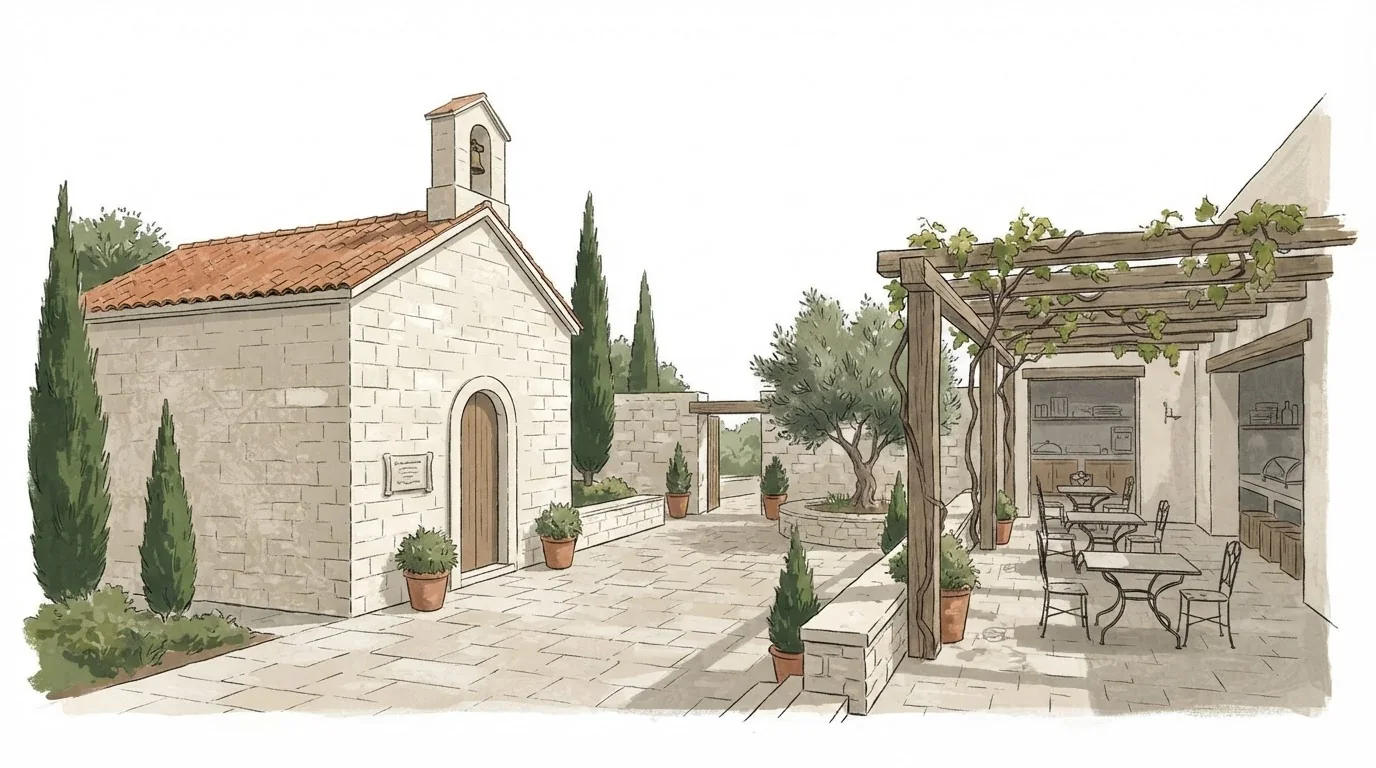
Why the venue and the ceremony are two different projects
An estate is a business. It manages buildings, grounds, staff, catering, noise limits and timings. A ceremony involves permission, denomination, clergy and sometimes civil registration. The two overlap on the calendar, but they are not the same approval. Treat them as parallel tracks that must meet at one agreed date and time.
This matters most when a couple assumes that booking the estate means booking the ceremony. It does not. The estate can hold your date for a reception while the ceremony side is still unresolved. If the ceremony permission comes through for a different day, you may be holding a reception date you cannot use.
Ask the estate what it can confirm in writing: exclusive use, set-up and clear-down windows, capacity for seated dining, kitchen access, music curfew, parking, and whether the chapel is included at all or simply adjacent. Then ask, separately, who handles the ceremony file.
Who answers what: a venue-versus-ceremony-coordinator split
The fastest way to lose a week is to send every question to the estate. Use this split instead. It is an example of how to sort questions, not a claim about any particular venue.
| Question | Who can answer | What to ask for |
|---|---|---|
| Is the chapel available on our date? | Estate or chapel custodian | Written hold, release date, deposit terms |
| Can we have a religious ceremony here? | The responsible religious authority | Eligibility, required documents, local rules |
| Which denomination or rite is recognised? | The responsible religious authority | Confirmation in writing, not a verbal yes |
| Which clergy can officiate? | The responsible religious authority or the officiant's own body | Name, affiliation, permission to serve at this location |
| Is a civil ceremony possible on site? | Local civil registry or municipality | Where the ceremony may legally take place |
| What does the reception package include? | Estate | Written quote, inclusions, exclusions, timings |
| Who coordinates the ceremony on the day? | Ceremony coordinator, appointed by you | Arrival times, rehearsal, order of service |
| What happens if the ceremony permission is delayed? | Both, in writing | Fallback date, refund or transfer terms |
| Who handles flowers, chairs and aisle set-up? | Estate or your planner | Responsibility list, access times |
| Who pays for chapel cleaning or restoration? | Estate and ceremony authority | Clarify in the quote before signing |
Notice how few of these the estate can answer alone. The venue controls the physical setting. The ceremony authority controls whether the rite can happen and who may lead it. Your coordinator controls the day itself.
The permission question you should not route through the venue
Eligibility is the one question that must go to the responsible authority. That could be a religious body, a diocese, a parish, or a local registry office, depending on the ceremony you want. Do not accept a venue's reassurance that it will be fine. Do not accept a coordinator's verbal summary of what is allowed. Ask the authority directly and ask for the answer in writing.
Eligibility can cover your denomination, your civil status, previous marriages, required paperwork, residency, and the timing of any preparation course. None of that is a venue matter. A venue can tell you the chapel has hosted ceremonies before. It cannot tell you that your specific ceremony qualifies.
A narrow official example: the Greek tourism authority describes wedding settings on Santorini including hotels, beaches and rural churches, according to Visit Greece. That tells you rural churches exist as wedding settings in one part of Greece. It does not tell you what is allowed at your estate, or who may officiate.
What to confirm about clergy, rite and timing
Once eligibility is clear, the practical questions begin. Which officiant will travel to the estate? Does that person need permission from a local authority to serve there? How long does that permission take? What documents must the officiant receive, and by when?
Timing is where couples get caught. A priest or officiant may be available on your date but unable to serve at that specific location without a separate approval. A local authority may require notice periods that differ from what the estate assumes. Build a buffer between the ceremony approval and the reception date. If the approval is late, you want room to move the ceremony without losing the reception.
Ask the ceremony side for a simple written timeline: what you submit, to whom, by when, and what comes back. Ask the estate for its own deadline: the latest date you can change the ceremony time without losing the reception slot.
Money, quotes and the lines between them
A chapel on an estate often comes with two financial conversations. The estate quotes for the space, catering and staffing. The ceremony side may involve its own fees, documents or donations. Do not let one quote imply the other is settled.
For any pricing question, use blank fields rather than assumptions. Ask for a written quote that lists each item separately. Where tax appears, ask whether the quoted amount includes tax as quoted and which part of the total it applies to. Do not assume a package covers chapel access, cleaning, chairs or an officiant unless the quote says so.
Keep the ceremony costs in their own section so a delayed permission does not distort the reception budget.
Your checklist before you sign anything
Use this as a working list. It is an example of a structure, not a template from any venue.
- Estate quote: room, terrace, chapel access, set-up, clear-down, catering, staffing, curfew.
- Ceremony authority: eligibility, documents, officiant, permission to serve at this location, timeline.
- Coordinator: who is on site, when, and who speaks to whom.
- Fallback: what happens if the ceremony date or time changes after the reception is booked.
- Written confirmations: eligibility from the authority, inclusions from the estate, responsibilities from the coordinator.
- Money: which quote covers what, tax as quoted, and what is refundable if permission fails.
Do not sign a reception contract that assumes ceremony approval. Do not treat a venue's confidence as permission. Do not treat a coordinator's experience as a ruling. Put the two tracks in writing, name the responsible person for each, and set a date when both must be resolved.
What to send to suitable venues
When you contact an estate or a chapel venue, send one short message that separates the two tracks. Include your preferred date and a backup, your approximate guest count, whether you want a religious or civil ceremony, your denomination or rite if relevant, and whether you already have an officiant. Ask the venue to confirm in writing what it controls: chapel access, reception spaces, timings, catering and quote terms. Ask, separately, for a contact at the responsible ceremony authority. Then ask both sides for a written timeline and a clear answer on what happens if the ceremony approval does not arrive in time. That single message prevents most of the confusion that follows a beautiful estate visit.
Two useful next steps: What a Greece wedding package actually includes and One celebration, two ceremonies: brief the reception clearly.
Planning questions
If the estate includes a chapel, why can't the venue confirm that our ceremony will be allowed there?
The venue controls the physical setting, such as access and timings. Eligibility, denomination and officiant permission belong to the responsible religious authority or local registry office. Ask them directly and request written confirmation.
What should we confirm in writing from the estate and the ceremony authority to avoid losing the reception date?
Ask the estate for its latest change deadline and what happens if ceremony approval is delayed, including fallback or transfer terms. Ask the ceremony authority for a written timeline of submissions and approvals.