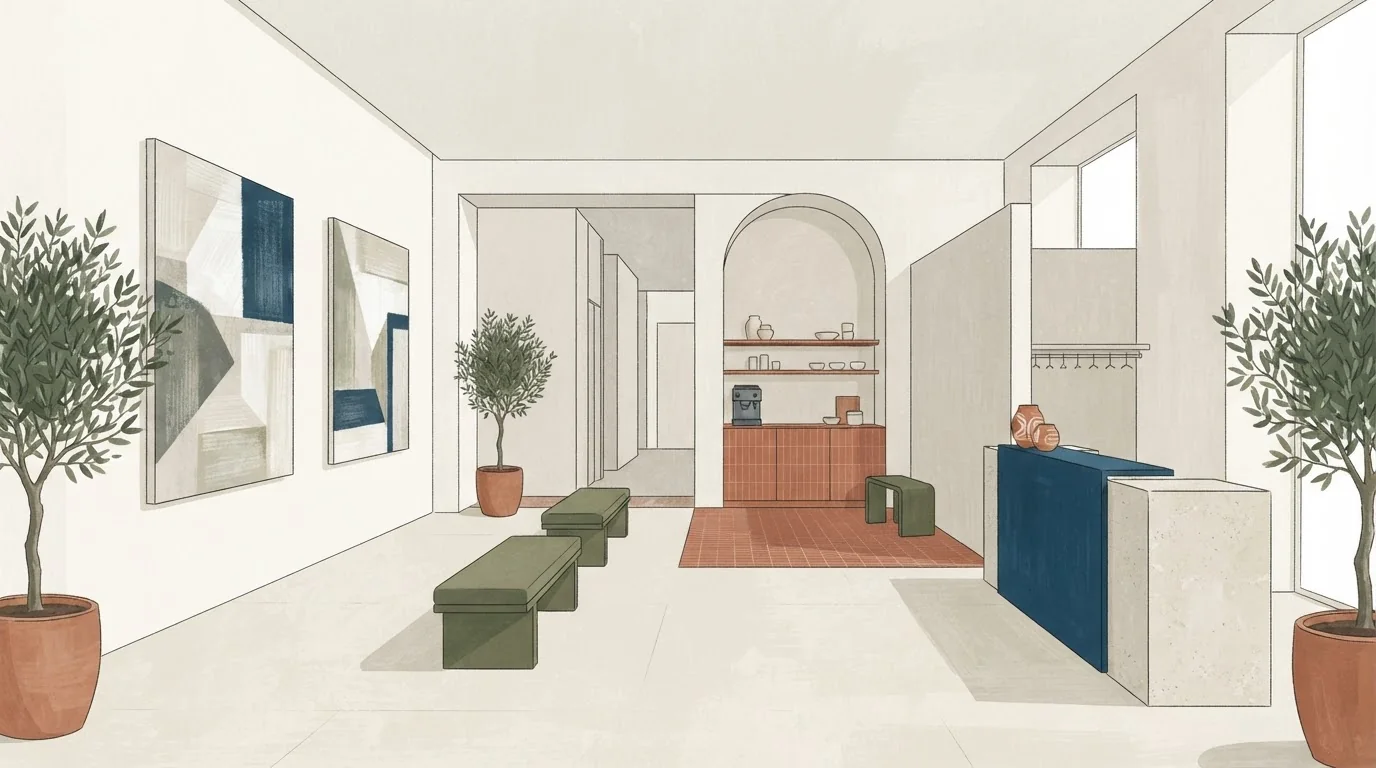
Why the viewing space comes first
A gallery reception has one job the venue does not share with a hotel ballroom: the art has to stay visible and safe. That does not mean roping off half the room. It means deciding which walls are display-only and which zones can absorb people, bags, condensation and noise. Artwork viewing should not compete with a queue for the cloakroom or a drinks station. Put the viewing path first, then fit the operations around it. Be honest about the tradeoff: a strict separation of routes can reduce the maximum seated capacity. That is usually the right call for a reception, but it does change the floor plan.
The four zones and what belongs in each
Treat the room as four overlapping but distinct zones. Display zone: the walls and plinths carrying the work, plus a viewing band in front of them. Arrival and coat zone: near the entrance, with a clear drop-off point and a staffed or self-service coat area. Drinks and food zone: away from textiles, paper, open frames and anything that reacts to heat or moisture. Delivery and service zone: a back route for crates, catering boxes, ice, glassware and waste. If the venue has only one entrance, the delivery route runs through the party. Plan the timing around that instead of pretending it will not happen.
A gallery reception zone plan you can copy
Use this as a starting sheet. Fill it in with the venue manager and the caterer in the same conversation. Numbers below are a blank template, not a market rule.
| Zone | What it holds | Route in | Route out | Fixed or flexible | Who owns it |
|---|---|---|---|---|---|
| Display | Artwork, plinths, labels | Viewing path only | Viewing path only | Fixed | Gallery |
| Viewing band | Guests reading labels, slow movement | From arrival | Toward drinks | Flexible width | Event lead |
| Arrival and coats | Bags, umbrellas, wraps, guest book | Main door | Back to viewing | Near entrance | Front-of-house |
| Drinks and food | Bar, trays, glass return, napkins | Service route | Glass and waste route | Flexible | Caterer |
| Delivery and service | Crates, boxes, ice, spare glass, bins | Back door or service lift | Same as in | Fixed | Venue and caterer |
| Quiet corner | Seating, water, first-aid point | From viewing | Back to drinks | Flexible | Event lead |
Drinks, coats and condensation
Drinks near art need distance and a plan. Ask where the bar can stand so that a spilled glass does not reach a frame, a textile or a paper work. Ask where wet umbrellas and coats go, because a coat pile on a gallery bench is both a mess and a viewing block. If the gallery has a cloakroom, confirm how many items it can take and when it opens. If it does not, decide whether you hire a coat rack and staff it. Example: for a 70-guest reception, a coat rack rated for 70 items and two staff on rotation is a workable starting assumption, but the actual number depends on the season and the venue's own storage. Do not guess at object insurance requirements. Ask the gallery what its own cover expects, and ask your own insurer what your event cover includes. Those are separate questions.
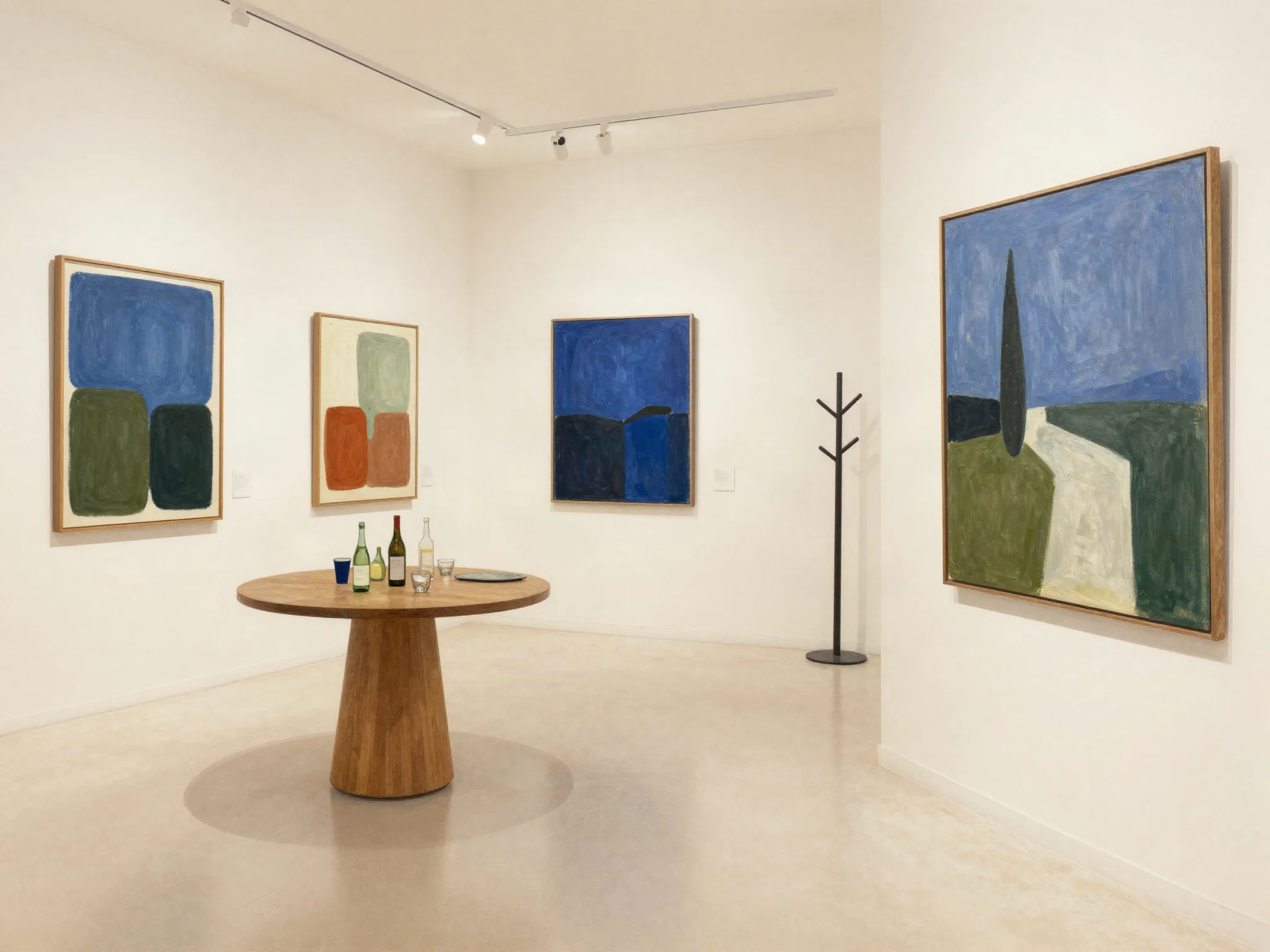
Delivery timing and the service route
Deliveries are the part guests notice only when they go wrong. A crate arriving through the front door at 19:30 is a problem. Ask for the loading access, the service lift dimensions, the floor protection rules and the waste route. Confirm whether the caterer can use the same corridor as the art handlers, and if not, build a schedule where the two never meet. Venue type matters here: a working gallery with an active exhibition programme may have its own event rhythm. For example, Ecali Club lists member-oriented art exhibitions, film nights, music nights and food-themed events, and public hire needs separate confirmation (Ecali Club). That single fact is a reminder to ask how any venue's own programme affects your date and your access, not an endorsement of any venue. If the venue also runs member events, ask which rooms stay open to you and which stay reserved for its own programme on your date.
What to send to suitable venues
Before you ask for availability, write a one-page brief. It should include: your date and time window; approximate guest count; whether the event is standing or seated; the number of artworks on display; whether you need a coat area; whether you need a bar and catering; your preferred delivery window; and the name of the person who will make decisions on the day. Send it with a request for a written quote that separates venue hire, staffing, coat storage, cleaning and any technical support. Ask which amount any tax applies to, and whether it is included or added. Say that you are asking several venues and that you will compare written terms.
The questions that save the evening
Ask these in writing and keep the answers together. Can we see a floor plan with fixed walls and power points marked? Which routes are step-free? Where can coats and umbrellas go if it rains? What is the latest time for deliveries and the earliest for collections? Who handles glass return and waste during the event? What happens if a guest touches an artwork? What is the venue's own rule for moving plinths or labels? Is there a separate area for the caterer to set up without crossing the viewing space? If the answers are vague, the plan is not ready. For venue browsing, start with our art gallery venues collection, but verify every detail directly with each venue. We do not check availability or suitability, and no booking has been made.
Before the site visit ends, ask the gallery to mark which areas can change and which must stay as they are. Put furniture moves, refreshments and coat storage on that marked plan. Keep a separate list of unanswered permissions. A clear boundary on the drawing is more useful to a caterer than a general instruction to be careful around the art.
If the gallery requests insurance documentation, ask which documents it needs and who will review them. Do not infer requirements from the value or appearance of the artworks.
Two useful next steps: Museum event hire: ask which rooms are actually available and Ask about the whole accessible route, not one ramp.
Planning questions
How can we keep the artwork viewing path separate from the cloakroom and bar queues?
Treat the room as distinct zones: display, viewing band, arrival and coats, drinks and food, and service. Put the viewing path first, then fit operations around it. Be aware that strict route separation can reduce maximum seated capacity.
If the gallery has only one entrance, how should we plan deliveries and the service route?
Then the delivery route runs through the party, so plan the timing around that instead of pretending it will not happen. Ask about loading access, service lift dimensions, floor protection rules and waste route, and schedule art handlers apart from caterers.