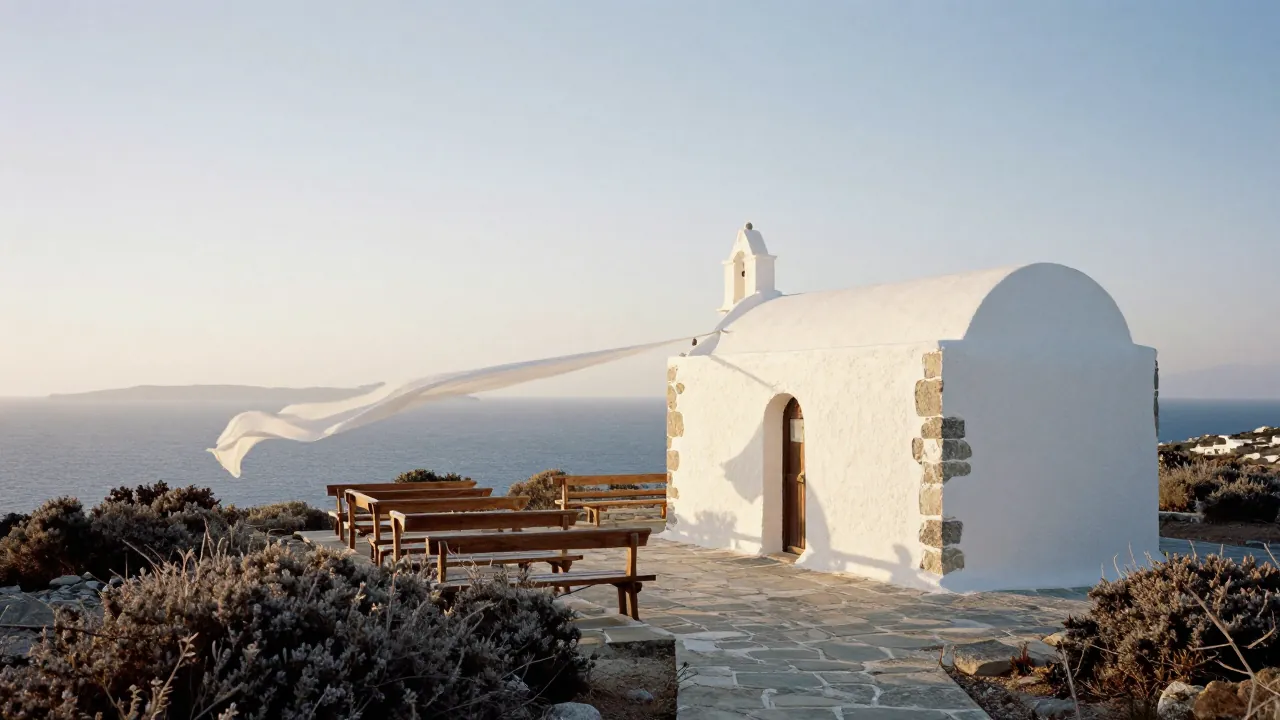
What a beach ceremony actually needs permission for
Treat the beach as shared public space unless the venue shows you otherwise in writing; that shapes everything. A ceremony with a celebrant, chairs, an arch and a sound system is not a quiet swim; it's an organised event on public land. Someone has to grant it, and that someone differs by location.
The practical chain usually runs through the municipality (or the private beach operator) for use of the space, the parish or registry office for anything with legal weight, and the venue or planner for setup and cleanup. In some areas the coast guard, forestry service or archaeological service also has a say. We can't tell you which applies at your cove, and we won't pretend a single rule covers the whole country. Ask the venue and the municipality directly, in writing, and confirm current requirements with the competent authority before you print invitations.
A venue that hosts coastal ceremonies should know this routine. Assuming "the beach is public, so we can just show up" is how a ceremony ends up moving at the last minute.
The beach question list, with an owner for every answer
This is the list we'd put in front of any coastal venue before signing. Every question gets a named owner: the venue, the planner, you, or the municipality. No owner, no answer, no booking.
| Question | Owner | What a good answer looks like |
|---|---|---|
| Who controls the exact sand we'll stand on? | Venue | A named person or department, not "it's fine" |
| Who files any permission request, and by when? | Venue or planner | Named filer, named office, agreed date |
| Is the ceremony spot private, municipal, or state beach? | Venue | A plain answer with the boundary |
| What happens if another group books the same spot? | Venue | A written priority rule |
| Is there a sound limit, and who enforces it? | Municipality or venue | A number in writing from the authority |
| What time must amplified sound stop? | Municipality or venue | A clock time, confirmed |
| Where do guests park, and who directs them? | You or planner | A named person at a named spot |
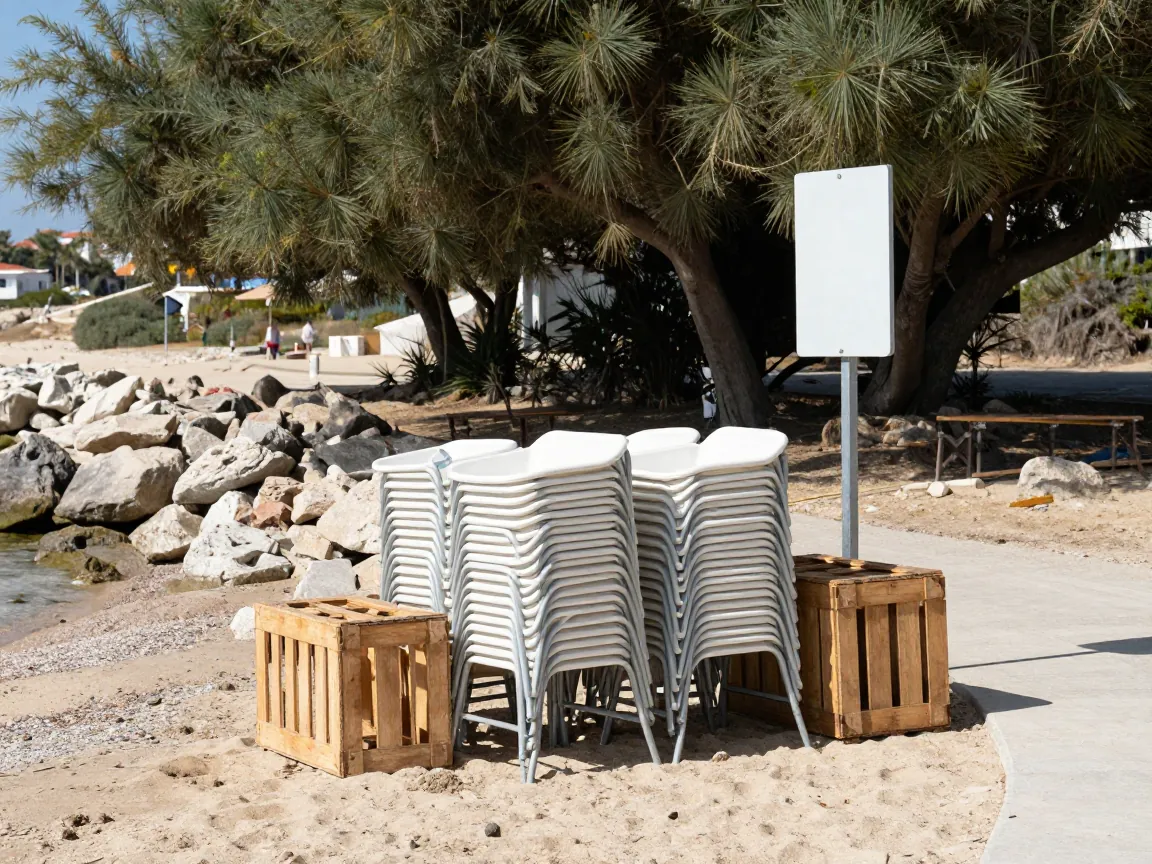
| Who removes chairs, arch and rubbish, and when? | Venue | Cleanup included in the contract |
| What's the rain and wind plan, hour by hour? | Planner | A dry venue held with a decision time |
| Who confirms legal paperwork for the ceremony type? | You | The parish, registry office or consulate |
| Are there archaeological restrictions nearby? | Municipality | A yes or no from the competent office |
| What footwear works on this sand at this hour? | You | Tested by someone who's stood there |
Print it, fill it in, and treat blank cells as open risks. Two blanks are manageable. Six is a warning.
Wind, sound and the archaeology of a perfect cove
Wind is the quiet saboteur of Greek beach ceremonies. An afternoon meltemi on an exposed Cycladic shore can turn a veil into a whip and a lightweight arch into a sail. Ask the venue what the wind does at your hour on your date, not in general. Then choose the hour that works: in our view, early morning and late afternoon are often calmer and cooler, and they photograph better anyway.
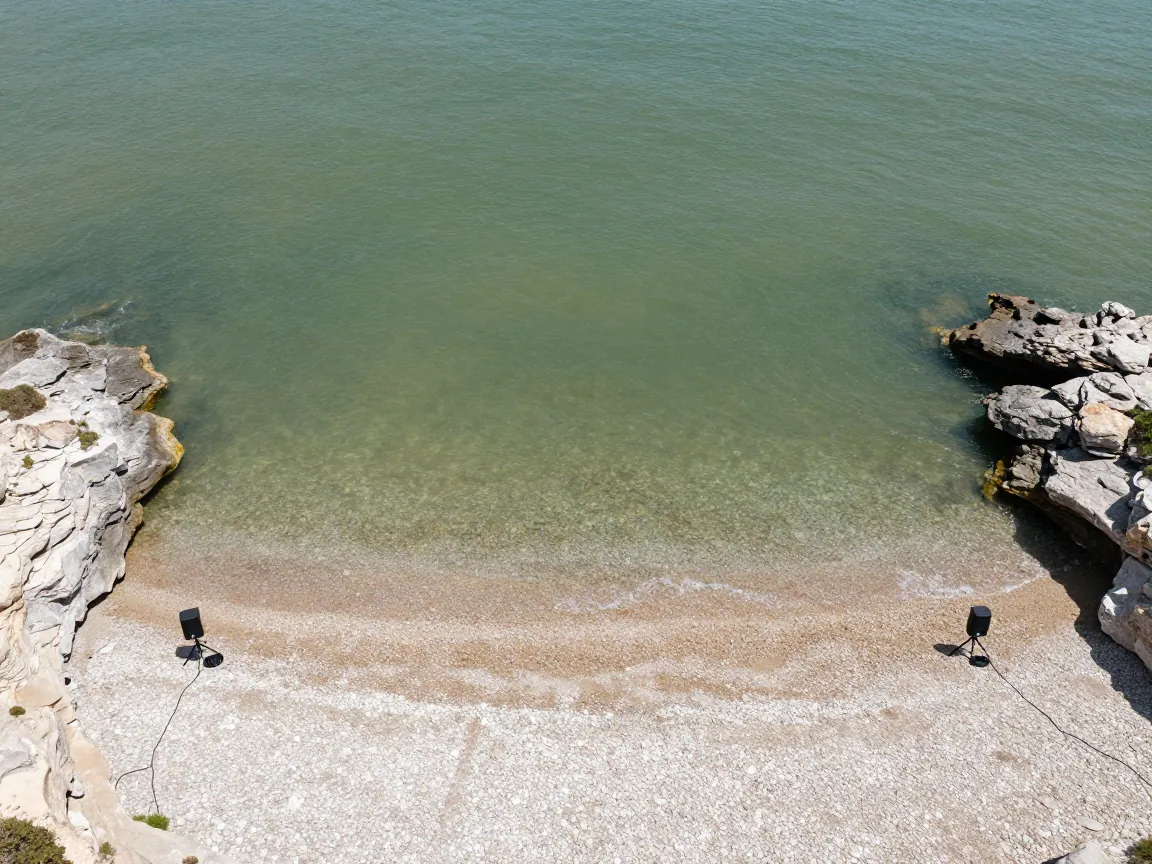
Sound is the second constraint. Amplified music on a public beach usually needs someone's blessing, and the blessing often comes with a stop time. Get that stop time in writing and build the timeline backwards from it. If the party continues elsewhere, the transition needs its own plan; our guide to Rhodes wedding logistics is a useful reminder that one address is rarely enough on a Greek island.
Archaeology is the third. Greece protects antiquities, and a beach near a known site may carry extra restrictions on setup, digging or even vehicle access. This is a question for the municipality, not for a forum. Visit Greece describes Zakynthos as the third largest Ionian island, home to Navagio, one of Greece's most photographed beaches. A beach that famous is best treated as a photo backdrop, not a blank venue, until the authorities tell you otherwise.
Finally, test the sand yourself or send someone who will. Fine sand and heels don't mix; neither do soft sand and elderly guests. Flat sandals, wedges or bare feet are the realistic options, and you should say so on the invitation.
Your dry backup needs its own floor plan
Every beach ceremony needs an indoor or covered alternative, held with a decision time. Not "we'll see on the day". A real plan: a booked space, a named person who makes the call, and a clock time for that call, usually the morning of.
The backup isn't just a room. It's a second floor plan. Where do guests sit, where does the ceremony happen, where does the sound system go, where do people park? A room that seats your guests for dinner may not fit them in ceremony rows with an aisle. Our guide to your island wedding backup makes the point that a backup without its own layout is just a hope.
For a city-based wedding party rather than a beach ceremony, the listing for Event House 2 shows what an indoor option looks like in practice: a ground-floor space on Irodou Attikou Street in the Ano Ladadika area of Thessaloniki, with sound equipment, party lighting, tables and chairs, air conditioning and two WCs, according to its listing. The listing says guests may bring their own drinks or buy them from the venue at cost, and that staffing such as a bartender, service or DJ can be arranged on request. It's a reminder that indoor doesn't mean plain; it means predictable.
Timing, dress code and what to put on the invitation
A beach ceremony lives or dies on small logistics. Build the day around three fixed points: the ceremony hour, the sound stop time, and the backup decision time. Everything else flexes.
For guests, be specific. Say the surface is sand, say whether shoes come off, say how far the walk is from parking, and say if there's no shade. Offer a shoe basket at the edge of the sand. Provide water. If the ceremony is at midday in July, reconsider; if it's at sunset, warn guests about the temperature drop after dark.
For children and older guests, add a shaded waiting point and a clear meeting spot. For photographs, ask the photographer to scout the spot at your exact hour on a previous day. Light and wind at six in the evening are not the same as at noon.
To be fair, no amount of planning makes a beach ceremony as controllable as a courtyard. You are borrowing public space for an hour. In our view, the beach ceremonies that work best accept that from the start: a short ceremony on the sand, and the party somewhere you control.
Tell us your headcount, your date and your preferred coastline, and we'll point you toward venues that can answer the permission questions in writing before you commit.
Planning questions
Who actually controls a beach ceremony spot in Greece?
It depends on the beach. A private beach club controls its own sand, a municipal beach falls to the municipality, and remote coves may involve the state or archaeological service. Ask the venue and the local authority in writing, and confirm current requirements with the competent authority.
Do we need permission for music on a Greek beach?
Often yes, and it usually comes with a stop time. Ask the municipality or the beach operator for the rule and the hour in writing, and build your timeline backwards from that stop time rather than assuming silence is optional.
What should guests wear to a beach ceremony in Greece?
Flat sandals, wedges or bare feet work on sand; heels mostly do not. Say so on the invitation, offer a shoe basket at the edge of the sand, and warn guests about the temperature drop after sunset.